1
Загрузите фотографии
Загрузите чёткую фотографию анфас. При желании добавьте снимки в профиль — всего до четырёх фотографий.
Перетащите файл сюда
НЕОБХОДИМЫЕ РАКУРСЫ


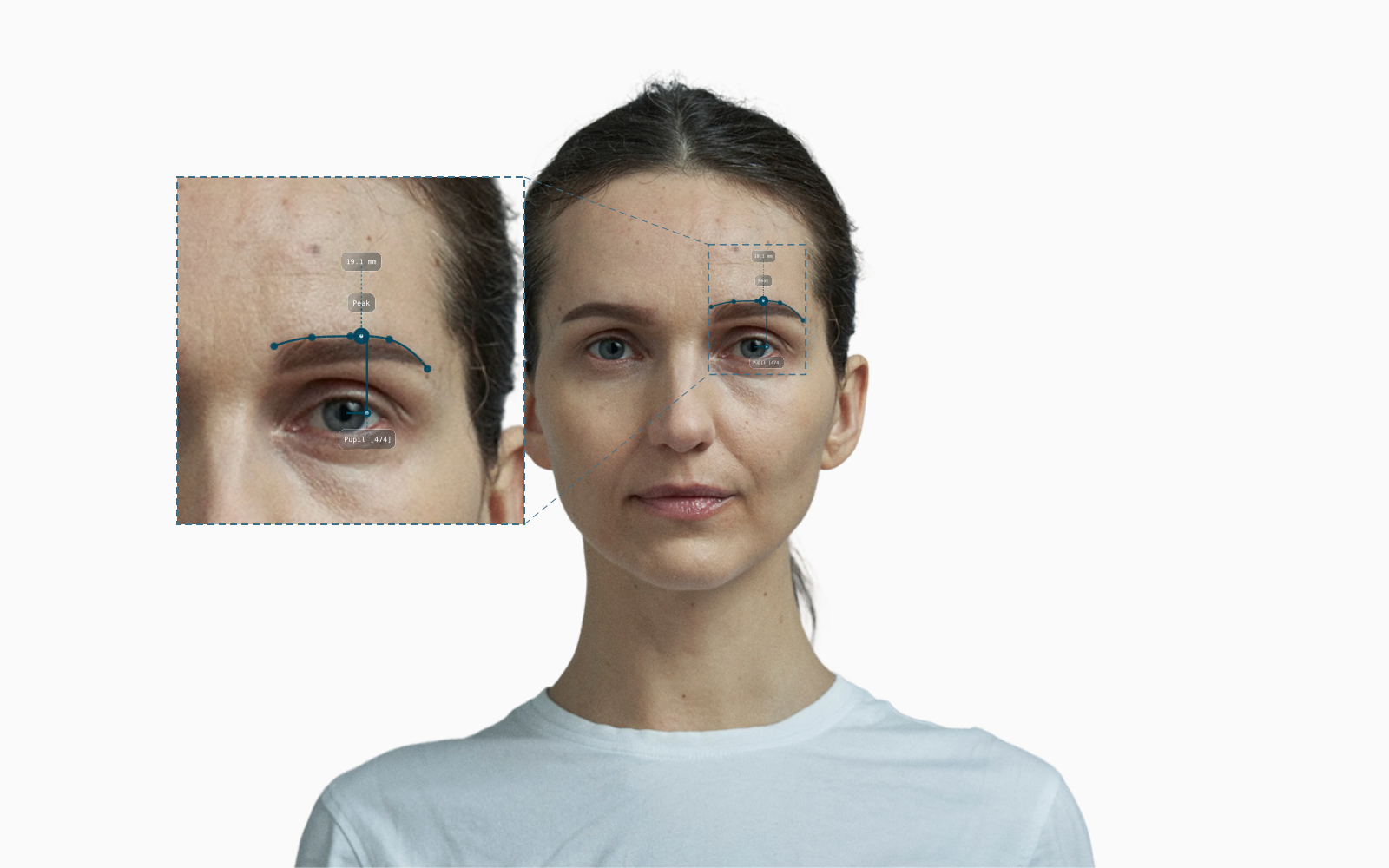
Brow position is how high or low your eyebrows sit above the eyes, the difference people describe as high-set or low-set eyebrows. FASEVA reads it as the vertical distance from the pupil up to the peak of the brow. It is one of the strongest sex cues in the upper face: women's brows sit higher, men's sit lower and flatter on the bone.
How It's Measured
Brow position is the vertical distance between the eye and the eyebrow, read at the peak of the arch. FASEVA drops a line from the center of the pupil straight up to the highest point of the brow and records that height, the same mid-pupil reference clinicians use to gauge brow-to-lid spacing (Eyebrow surgical planning, 2017). The classic reference is Westmore's model, which places the peak of the arch over the lateral limbus, the outer edge of the iris (Female eyebrow arch study, 2003).
A tall gap reads as high-set and open. A short gap reads as low-set and heavy, the brow crowding down onto the lid.

The same face with the brows lifted higher on the right. The brow position reads 19.2 mm on the left and 21.4 mm on the right. Same identity, same lighting, same framing.
Why It Matters
Brow position is one of the clearest sex differences in the upper face. Women carry higher, thinner brows that arch above the bony orbital rim, while men carry lower, flatter brows that sit right on it (Facial contrast study, 2015). Raising the brow even a little feminizes a face, which is why a lateral brow lift is a standard feminizing step (AI facial dimorphism, 2023).
Height is not the whole story. Where the brow peaks matters as much as how high it sits. Westmore's model, still the working standard, puts the peak over the lateral limbus and the tail higher than the head, and in women the lateral brow can sit up to 10 mm above the rim (Naini, 2011). A flat brow with no defined peak reads heavier and older even when the measured height is normal (Female eyebrow arch study, 2003).
Brow position also drops with age. The lateral third descends first as the forehead loosens, and the brow can sink low enough to crowd the upper lid, a change surgeons call brow ptosis (Meneghini, 2005). It is also why relaxing the forehead with botulinum toxin can pull the brow down further when the frontalis is over-treated (Botulinum toxin review, 2003). The cards and table below give working ranges, but read them against sex and age.
18–22 mm
Men
22–27 mm
Women
18–27 mm
Typical Range
Approximate distance from the pupil to the peak of the brow. Brow position is judged proportionally and varies with individual anatomy, sex, and age.
Demographic Variants
Brow position varies most by sex and age rather than by one universal number. Each row links to the study that measured it.
Group | Brow position tendency | Source |
|---|---|---|
Women | Higher, thinner brow arching above the orbital rim; peak over the lateral limbus | |
Men | Lower, flatter brow sitting on the orbital rim, with a longer medial portion | |
With age | Brow descends over time, the lateral third first, sometimes crowding the upper lid |
Загрузите чёткую фотографию анфас. При желании добавьте снимки в профиль — всего до четырёх фотографий.
Перетащите файл сюда
НЕОБХОДИМЫЕ РАКУРСЫ
ИИ разбирает 177 параметров лица: видимые особенности кожи, пропорций, глаз, бровей и других черт. Недоступные по снимку показатели не измеряются.


Вы получите план с описанием сильных сторон, черт, которые можно улучшить, и наиболее подходящих способов сделать это.
Отчёт Эммы
16 января 2026 года
Объяснение
Глубина морщин на лбу соответствует норме для вашего возраста и демографической группы и находится ближе к нижней границе ожидаемого диапазона.
Ваши вопросы
Low-set eyebrows sit close to the eyes, with a short gap between the lash line and the brow, and they usually run flatter with less of a defined peak. They read as heavier and are more typical of male brows, which rest on the bony orbital rim rather than above it (Naini, 2011).
The difference is the vertical gap between the eye and the brow. High-set brows arch well above the orbital rim and leave a taller, more open lid space, while low-set brows sit close to the eye on or near the rim. Women's brows are typically higher-set than men's, one of the reliable sex differences in the upper face (Facial contrast study, 2015).
Neither is universally better; it depends on the face and the sex it belongs to. A higher, gently arched brow reads as more feminine and youthful, while a lower, straighter brow reads as more masculine. What raters agree on is the peak sitting over the outer edge of the iris rather than any single height (Female eyebrow arch study, 2003).
The most cited target is Westmore's model: the head of the brow lines up above the inner corner of the eye, the peak sits over the lateral limbus (the outer edge of the iris), and the tail ends higher than the head. In women the lateral brow can sit up to 10 mm above the bony rim (Naini, 2011).
Botulinum toxin relaxes whichever muscle it is injected into. The frontalis is the only muscle that lifts the brow, so over-treating the forehead removes that lift and the brow settles lower, giving a heavy, hooded look until the effect wears off (Botulinum toxin review, 2003).