1
Загрузите фотографии
Загрузите чёткую фотографию анфас. При желании добавьте снимки в профиль — всего до четырёх фотографий.
Перетащите файл сюда
НЕОБХОДИМЫЕ РАКУРСЫ


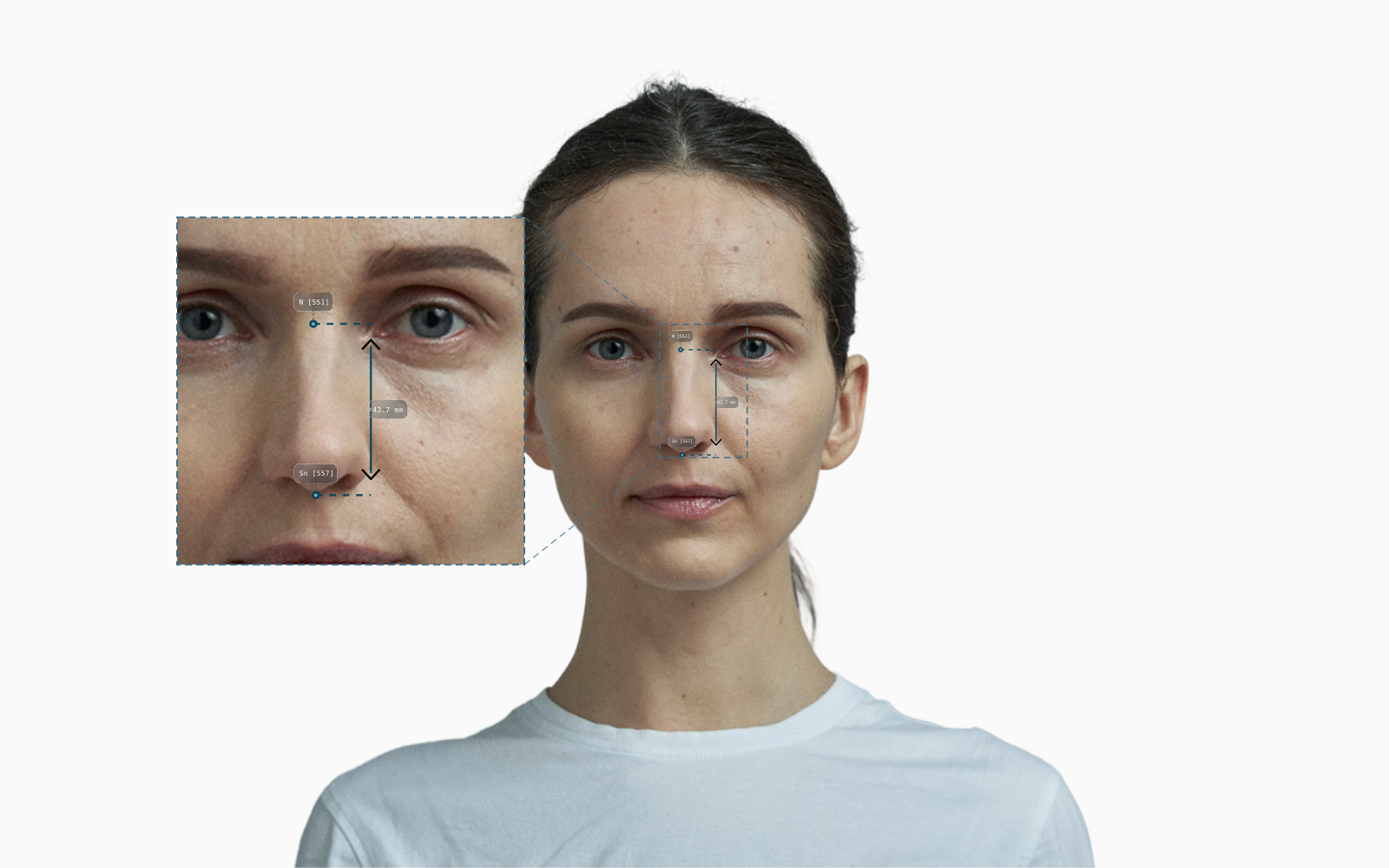
Nasal height is the vertical length of the nose, measured from the nasion at the root between the eyes down to the base of the nose. It fills most of the middle third of the face, so a tall nasal height is a big part of why a nose reads as long or prominent. FASEVA reads it as a straight vertical distance on a front-on photo.
How It's Measured
Nasal height is the vertical distance from the nasion (N) to the subnasale (Sn), the two soft-tissue points that bracket the nose top and bottom (Virdi et al., 2019). FASEVA marks both points on a front-on photo and reads the straight-line height between them.
Height is not the same as nose length, which runs from the nasion to the tip, or projection, which is how far the tip stands off the face (Armengou et al., 2023). A nose can be tall without being especially projected, and the two are corrected differently.

The same face with a longer nose on the right. The nose height reads 43.7 mm on the left and 44.9 mm on the right. The nose looks markedly longer than that small change suggests, because the landmarks that bracket it shift downward with the whole midface. Same identity, same lighting, same framing.
Why It Matters
The nose owns the middle third of the face, so its vertical height drives how balanced the whole face looks. A tall nasal height lengthens the midface and pulls attention down the center line, which is a large part of why some noses read as long even when they are not especially wide (Armengou et al., 2023). Facial-proportion studies keep finding nasal length among the ratios that shift attractiveness ratings (Zheng et al., 2022).
Nasal height is sexually dimorphic. Men carry taller, larger noses than women on average, part of the broader pattern of a bigger male nose that houses a larger airway (Springer et al., 2008). A tall nose therefore reads as more masculine, and reducing height is a common feminizing request in rhinoplasty.
There is no universal ideal. Nasal height tracks with nasal type, taller and narrower in leptorrhine (European) noses, and shorter and broader in mesorrhine and platyrrhine (East Asian and African) patterns (Leong et al., 2009). A single target number misreads most non-Caucasian faces, so read the cards and table below against sex and background.
50–55 mm
Men
44–50 mm
Women
44–55 mm
Typical Range
Approximate nasal height from the nasion to the base of the nose. Values vary with sex, ancestry, and overall face length.
Demographic Variants
Nasal height varies by population along the classic leptorrhine, mesorrhine, and platyrrhine nasal types, so the ideal is relative. Each row links to the source that measured it.
Population | Nasal height tendency | Source |
|---|---|---|
European (leptorrhine) | Taller, narrower nose; greater height relative to width | |
African (platyrrhine) | Broader, lower nose; height reduced versus Caucasian norms | |
East Asian (mesorrhine) | Medium height with a lower dorsum and shorter nasal bones | |
Middle Eastern | Long, high nasal dorsum on average |
Загрузите чёткую фотографию анфас. При желании добавьте снимки в профиль — всего до четырёх фотографий.
Перетащите файл сюда
НЕОБХОДИМЫЕ РАКУРСЫ
ИИ разбирает 177 параметров лица: видимые особенности кожи, пропорций, глаз, бровей и других черт. Недоступные по снимку показатели не измеряются.


Вы получите план с описанием сильных сторон, черт, которые можно улучшить, и наиболее подходящих способов сделать это.
Отчёт Эммы
16 января 2026 года
Объяснение
Глубина морщин на лбу соответствует норме для вашего возраста и демографической группы и находится ближе к нижней границе ожидаемого диапазона.
Ваши вопросы
In adults nasal height runs roughly 44 to 55 mm from the nasion to the base of the nose, with men averaging taller than women (Springer et al., 2008). The figure shifts with ancestry, running taller in narrow European noses and shorter in broad African and East Asian patterns (Leong et al., 2009).
A long-looking nose is usually driven by nasal height, the vertical distance from the root to the base, rather than by width. When that span is tall it stretches the middle third of the face and the nose dominates the profile, which is often paired with a downward-pointing or drooping tip (Armengou et al., 2023).
Yes. Nasal height is one of the sexually dimorphic nose dimensions: men carry taller, larger noses on average to match a larger airway and larger overall face (Springer et al., 2008). A tall nose reads as more masculine, so reducing height is a common step in feminizing rhinoplasty.
Yes. Rhinoplasty can shorten a tall nose by trimming the septum and lower cartilages and rotating the tip upward, which lifts the base and reduces the vertical height. How much is safe depends on skin thickness and the starting proportions rather than on a fixed target (Springer et al., 2008).