1
Загрузите фотографии
Загрузите чёткую фотографию анфас. При желании добавьте снимки в профиль — всего до четырёх фотографий.
Перетащите файл сюда
НЕОБХОДИМЫЕ РАКУРСЫ


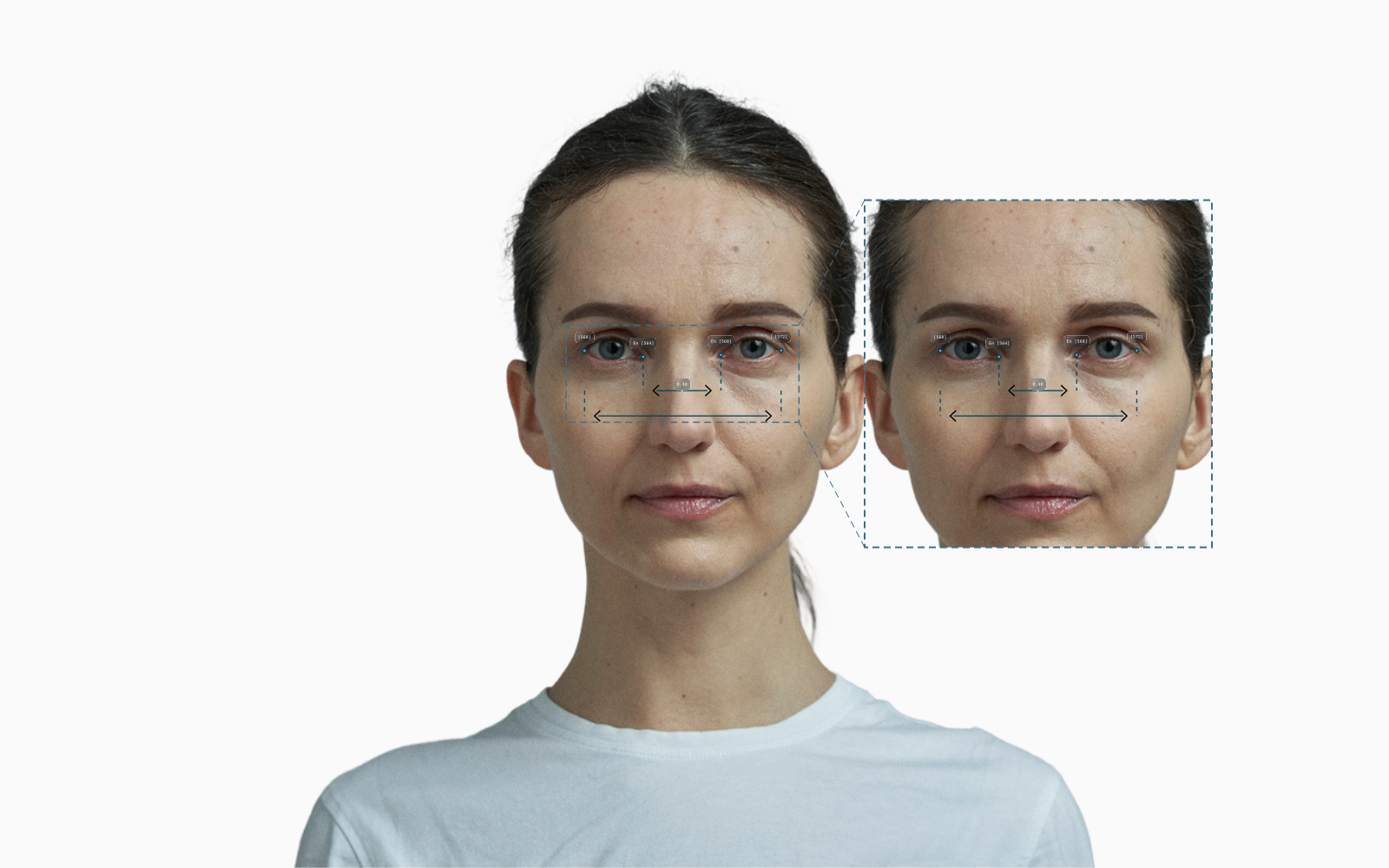
The eye spacing ratio compares the gap between your inner eye corners to the full span across the outer corners of both eyes. It turns eye spacing into a single number, so instead of guessing whether eyes look close set or wide set you can read it off proportionally. A balanced face lands near one third, the point where the gap between the eyes is about one eye wide.
How It's Measured
The eye spacing ratio divides the intercanthal width, the gap between the two inner eye corners, by the biocular width, the distance across the outer corners of both eyes. Both are read on a front-facing photo with a relaxed forward gaze, and dividing one by the other cancels out face size so the number compares fairly across people (Babacan et al., 2025).
Read this way, the eye spacing ratio sits near one third on a balanced face, because the classic canon divides the eye region into three roughly equal parts: eye, gap, eye (Thappa, 2023). A higher ratio reads as wide set, a lower one as close set.
Why It Matters
Eye spacing is one of the loudest signals on a face, and folding it into a single ratio is what lets you judge it objectively rather than by feel. We read average, symmetric layouts as attractive, and eye spacing near the population norm tends to look most harmonious (Pallett et al., 2010). Push the ratio well above or below that band and the midface starts to feel off, even when every other feature is untouched.
The rule behind the ideal is old and simple. Classical facial canons split the width of the eyes into three equal thirds, so the gap between them should be about one eye wide, which puts the eye spacing ratio near one third (Naini, 2011). It is a guideline, not a law, and plenty of striking faces sit a little outside it, but it is a useful anchor for reading a face.
Where the ratio earns its keep is in comparison. Because it is unitless, the eye spacing ratio lets you line up your own eye spacing against a normative band without worrying about photo scale or face size (Babacan et al., 2025). The bands below show what counts as balanced, close set, and wide set on that scale.
Below 0.30
Close Set
0.30–0.38
сбалансирована
Above 0.38
Wide Set
Approximate eye spacing ratio bands (intercanthal width divided by the outer eye-corner span). Read proportionally; individual structure and background shift the ideal.
Demographic Variants
The ideal eye spacing ratio clusters near one third across populations, but the baseline shifts a little with ancestry and sex, so the ratio is read against the face it belongs to. Each row links to the source.
Population | Eye spacing ratio tendency | Source |
|---|---|---|
European reference | The rule-of-thirds layout used as the historical baseline, ratio near one third | |
East Asian | Often a relatively wider inner-corner gap alongside a flatter nasal bridge, nudging the ratio up | |
Men and women | Eye spacing tracks overall face size, so the ratio itself stays close between the sexes | |
Cross-population | Eye-region spacing is a recognised axis of facial variation, so a fixed target misreads many faces |
Загрузите чёткую фотографию анфас. При желании добавьте снимки в профиль — всего до четырёх фотографий.
Перетащите файл сюда
НЕОБХОДИМЫЕ РАКУРСЫ
ИИ разбирает 177 параметров лица: видимые особенности кожи, пропорций, глаз, бровей и других черт. Недоступные по снимку показатели не измеряются.


Вы получите план с описанием сильных сторон, черт, которые можно улучшить, и наиболее подходящих способов сделать это.
Отчёт Эммы
16 января 2026 года
Объяснение
Глубина морщин на лбу соответствует норме для вашего возраста и демографической группы и находится ближе к нижней границе ожидаемого диапазона.
Ваши вопросы
A balanced eye spacing ratio sits near one third, roughly 0.30 to 0.38, which is where the gap between the eyes is about one eye wide. That comes straight from the classical canon that splits the eye region into three equal parts (Thappa, 2023). It is a guideline rather than a hard target, so faces a little outside it can still read as balanced.
The classic answer is one eye width. Split the face into five equal vertical columns and the gap between the eyes should fill about one of them, which is the same as saying the eye spacing ratio should land near one third (Naini, 2011). A gap much wider than one eye reads as wide set, much narrower as close set.
Mildly wide set eyes can read as striking, but a face still tends to look most balanced when the eye spacing ratio sits near the population norm. Attractiveness tracks with average, symmetric layouts, so eye spacing close to that norm usually rates best (Pallett et al., 2010). Pushed far past it, the ratio climbs and the eyes start to read as too wide.
Measure the gap between the inner eye corners and the full span across the outer corners on a front-facing photo, then divide the first by the second to get the eye spacing ratio. Because the two distances share the same photo scale, the ratio compares fairly across faces of any size (Babacan et al., 2025).