1
Загрузите фотографии
Загрузите чёткую фотографию анфас. При желании добавьте снимки в профиль — всего до четырёх фотографий.
Перетащите файл сюда
НЕОБХОДИМЫЕ РАКУРСЫ


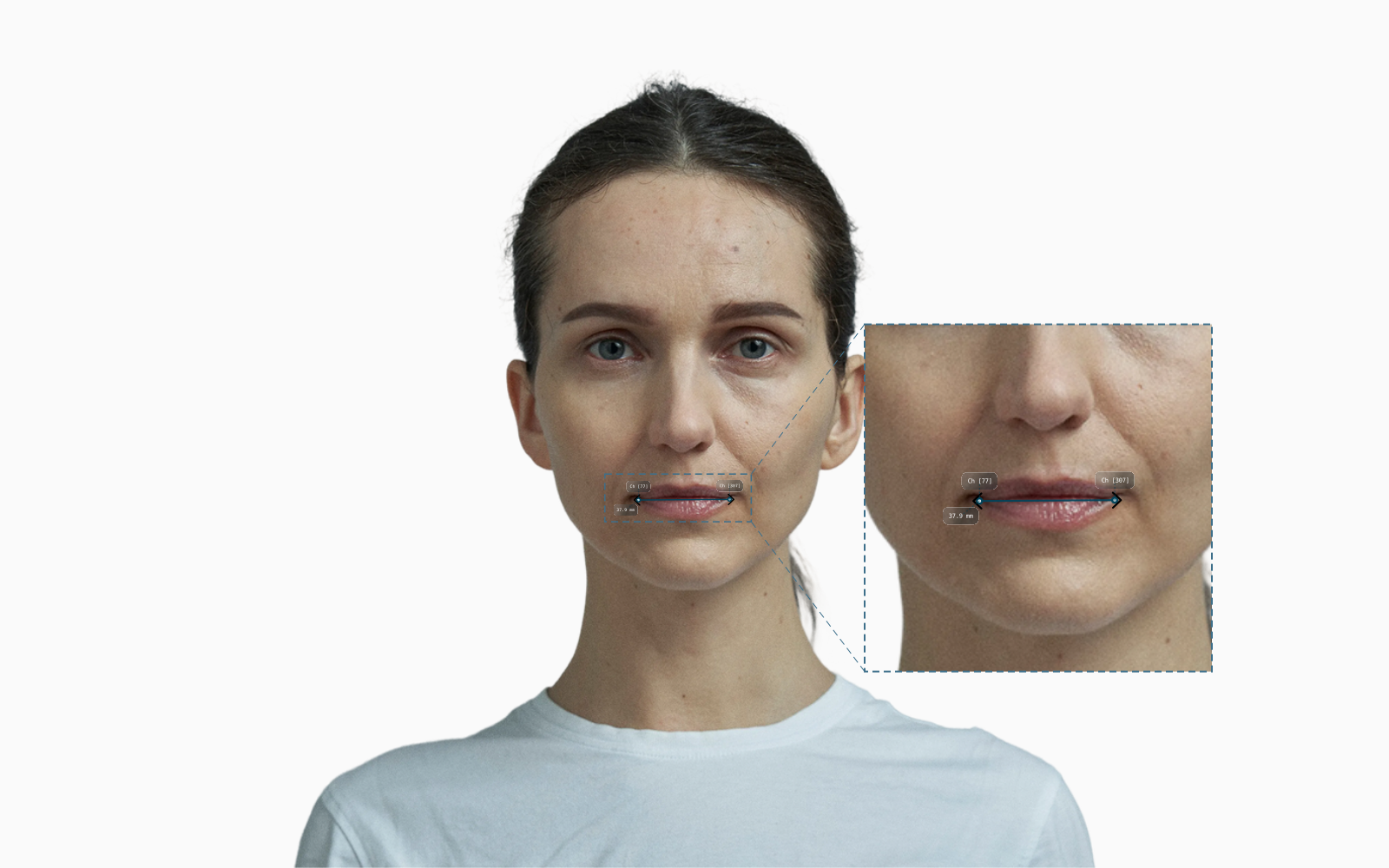
Smile width is how far the mouth stretches from one corner to the other, measured across the face. Clinically it is called mouth width or the intercommissural distance, and it is one of the width cues that decides whether a smile reads as broad and open or small and pinched.
How It's Measured
Smile width is the straight horizontal distance between the two mouth corners, the cheilion points, taken on a relaxed frontal face (Swennen & Naini, 2006). It is the same measurement clinicians call mouth width or the intercommissural distance.
Because the same muscles that pull the smile wide also flare the nostrils, mouth width tends to scale with nose width on the same face (Cunningham, 1986).

The same face with a wider mouth on the right. The mouth width reads 37.9 mm on the left and 48.5 mm on the right. Same identity, same lighting, same framing.
Why It Matters
A wider mouth generally reads as more attractive on a woman, and the effect holds up across raters from different cultures, which is unusual for a single feature (Cunningham et al., 1995). Smile width and smile area are among the more consistent positive cues in that work.
That does not mean wider is always better. The mouth-to-face width that raters prefer sits close to the population average, near 0.46, so a mouth that is too wide reads as off just as a pinched one does (Pallett et al., 2010). Smile width wins when it is proportioned to the face, not when it is simply large.
It is also not fixed for life. Mouth proportions differ by sex, and the corners tend to widen and flatten with age (Bulboaca et al., 2025). The cards and table below give working values, but read them against the width of the rest of the face.
~50 mm
Men
~48 mm
Women
45–55 mm
Typical Range
Approximate intercommissural (mouth) width at rest. Reported attractive-female values average near 48 mm. Smile width is judged proportionally to the face, so these are guides, not targets.
Demographic Variants
Smile width is read as a proportion, so what looks balanced shifts with sex and age. Each row links to the source that reports it.
Group | Mouth width tendency | Source |
|---|---|---|
Attractive Caucasian women | About 48 mm; roughly 0.44 of lower-face width | |
Men vs women | Lip and mouth proportions differ by sex; wider, flatter mouth reads more masculine | |
With age | Mouth corners widen and the lips flatten over time | |
Forensic estimation | Eye spacing overestimates mouth width by about 11 mm, so predictions hold poorly |
Загрузите чёткую фотографию анфас. При желании добавьте снимки в профиль — всего до четырёх фотографий.
Перетащите файл сюда
НЕОБХОДИМЫЕ РАКУРСЫ
ИИ разбирает 177 параметров лица: видимые особенности кожи, пропорций, глаз, бровей и других черт. Недоступные по снимку показатели не измеряются.


Вы получите план с описанием сильных сторон, черт, которые можно улучшить, и наиболее подходящих способов сделать это.
Отчёт Эммы
16 января 2026 года
Объяснение
Глубина морщин на лбу соответствует норме для вашего возраста и демографической группы и находится ближе к нижней границе ожидаемого диапазона.
Ваши вопросы
There is no fixed number in millimetres. In attractive Caucasian women the intercommissural width averages about 48 mm, roughly 0.44 of the lower-face width, so a balanced mouth is one that scales to the face rather than hitting a set target (Popenko, 2024).
It is the clinical name for smile width: the straight distance between the two mouth corners, cheilion to cheilion, measured at rest. It is a standard soft-tissue measurement used in facial analysis and in forensic facial approximation (Stephan, 2003).
Within limits, yes. A wider mouth and a larger smile area track with higher attractiveness ratings for women, and the effect is consistent across raters from different cultures (Cunningham et al., 1995). The preference plateaus near the average proportion rather than rewarding an ever-wider mouth (Pallett et al., 2010).
Yes. Smile width is positively correlated with nose width, because the muscles that widen the smile also flare the nostrils, so the two features tend to grow and move together on the same face (Cunningham, 1986).