1
Загрузите фотографии
Загрузите чёткую фотографию анфас. При желании добавьте снимки в профиль — всего до четырёх фотографий.
Перетащите файл сюда
НЕОБХОДИМЫЕ РАКУРСЫ


Nose width is how broad the nose looks from the front, measured across the alar base, the two flares of the nostrils at the bottom of the nose. It is one of the first things the eye reads on a face, and it is what people are talking about when they say someone has a wide nose. There is no single right number for it. What looks balanced depends a lot on your sex and your background.
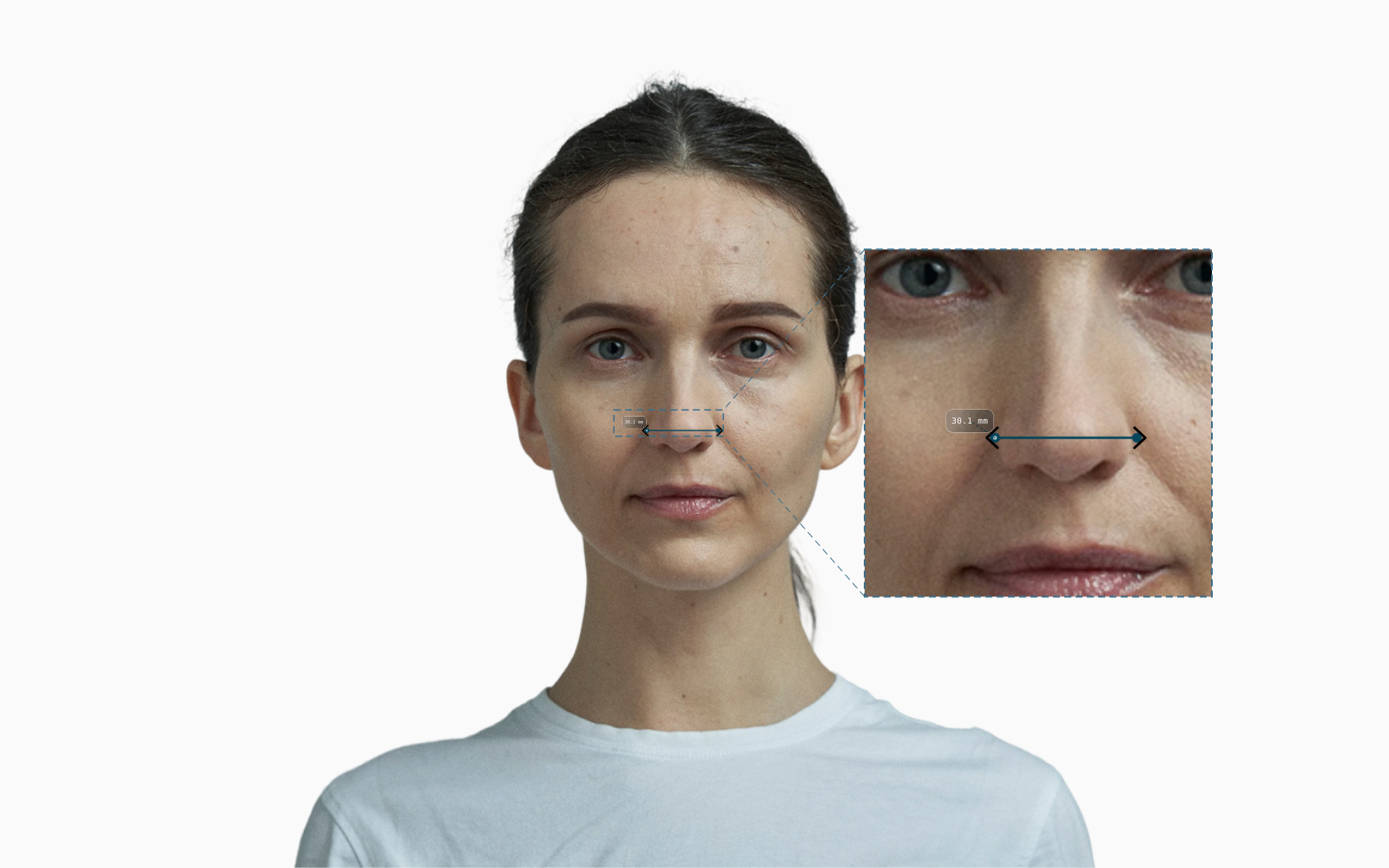
How It's Measured
Nose width is the straight-across distance between the two alar points, the outer edges of the nostrils where the nose meets the cheek (Farkas, Facial Aesthetics). It is taken from a front-on photo, with the head level and the face relaxed, since a smile pulls the nostrils wider and changes the reading.
Read this way, the alar width tells you whether the base of the nose sits narrow and tucked, or spreads out wide toward the cheeks (Hall et al., 2005).

Widening the alar base raised the nose width from 30 mm to 36 mm on the same face, same lighting, same framing.
Why It Matters
The nose sits dead centre of the face, so its width carries a lot of the first impression. A wide nose tends to read as more masculine, and a narrower base reads as more feminine, which is why nose shape is one of the more strongly sex-linked features of the face (Springer et al., 2008). That is also why the same width can look right on one face and heavy on another.
Here is the part most beauty guides skip. There is no universal ideal nose width. The classic Western canon, where the alar base matches the gap between the inner eye corners, fits almost nobody. In one study of healthy Caucasian noses, only 10 percent of people actually met it (Hall et al., 2005). So treating that canon as a target for every face is a mistake.
Width also varies by background more than almost any other facial trait. Researchers sort noses into narrow (leptorrhine), medium (mesorrhine) and broad (platyrrhine) types, and those types track closely with ancestry (Hall & Hall, 2009). A broad nose is the normal, expected shape across much of the world, not a flaw to be corrected. The cards and table below give working ranges, but read them against your own face and background, not against a single ideal.
34–40 mm
Men
31–37 mm
Women
32–38 mm
Typical Range
Approximate alar (nostril-to-nostril) width. Nose width is judged in proportion to the face and varies with individual structure and background.
Demographic Variants
Nose width varies by population and sex more than almost any other facial feature, so the ideal is relative, not absolute. The pattern below follows the classic narrow (leptorrhine), medium (mesorrhine) and broad (platyrrhine) nasal types; each row links to its source.
Population | Nose width tendency | Source |
|---|---|---|
European (leptorrhine) | Narrowest base on average | |
Middle Eastern | Medium width, thicker skin envelope | |
East Asian (mesorrhine) | Medium to broad, lower bridge | |
African (platyrrhine) | Widest base and alar flare | |
Hispanic / Mestizo | Broad base, often with alar flare |
Загрузите чёткую фотографию анфас. При желании добавьте снимки в профиль — всего до четырёх фотографий.
Перетащите файл сюда
НЕОБХОДИМЫЕ РАКУРСЫ
ИИ разбирает 177 параметров лица: видимые особенности кожи, пропорций, глаз, бровей и других черт. Недоступные по снимку показатели не измеряются.


Вы получите план с описанием сильных сторон, черт, которые можно улучшить, и наиболее подходящих способов сделать это.
Отчёт Эммы
16 января 2026 года
Объяснение
Глубина морщин на лбу соответствует норме для вашего возраста и демографической группы и находится ближе к нижней границе ожидаемого диапазона.
Ваши вопросы
A wide nose comes from the shape of the alar cartilages and the skin over them, not from bone. Broad or flaring lower cartilages, a thick skin envelope, and a low bridge all make the base spread wider, which is why a wide nose often runs in families and tracks with ancestry (Hall & Hall, 2009).
There is no single ideal. The old Western rule that the nose base should match the gap between the inner eye corners fits almost no one. In one study of healthy Caucasian noses, only about 10 percent met it (Hall et al., 2005). A good-looking nose width depends on your sex and nasal type, narrower in European noses and naturally broader in East Asian and African noses.
Not really. Fillers can smooth the bridge or add a little height, which can make a nose look slimmer from the front, but they add volume rather than narrow the base, so they cannot truly reduce a wide nose (Guyuron & Lee, 2017). Actually narrowing the alar base is a surgical change, done with a small alar base reduction.
Nose width is normally read in proportion, not in millimetres. As a rough guide the alar base sits around 32 to 38 mm in adults, a little wider in men, but the right width is the one that balances your own face and background (Springer et al., 2008). A broad nose is a normal, common shape, not a defect.