1
Загрузите фотографии
Загрузите чёткую фотографию анфас. При желании добавьте снимки в профиль — всего до четырёх фотографий.
Перетащите файл сюда
НЕОБХОДИМЫЕ РАКУРСЫ


The nasal index is the width of the nose divided by its height, one of the oldest numbers in facial anthropometry. Also called the nasal aspect ratio, it sorts nose shape into narrow, medium, and broad types. What counts as normal depends heavily on ancestry, so a single global ideal misreads most faces.
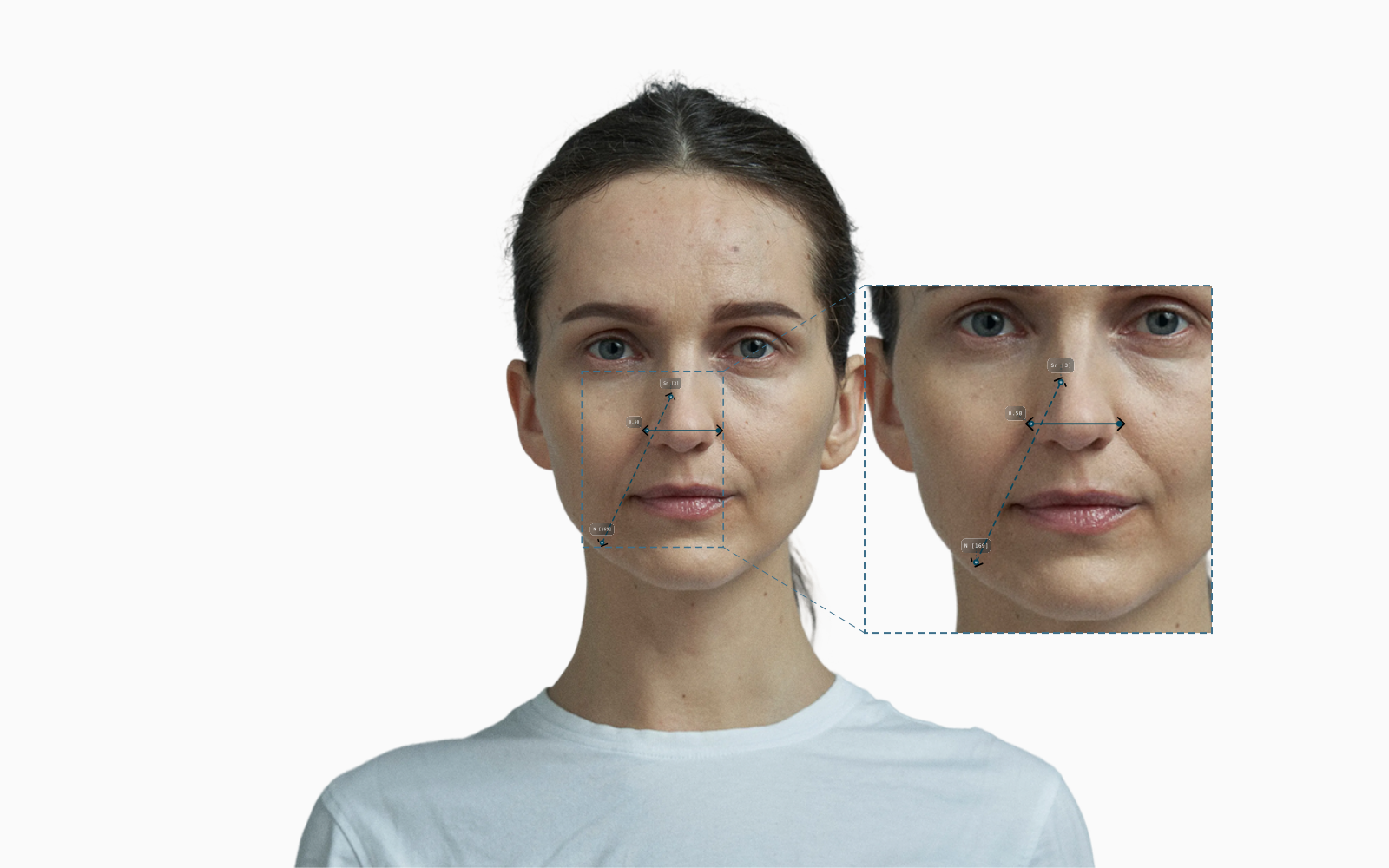
How It's Measured
The nasal index is the width of the nose at its base divided by its height, then multiplied by 100 to give a percentage (Sforza et al., 2023). Width is the straight span between the two alae; height runs from the nasion, near the root of the nose, down to the base where it meets the upper lip.
The formula goes back to classical anthropometry and is still the standard way to summarise nose shape today (Naini, 2011). It is a shape summary, not a beauty score.

Broadening the nose at the alar base raised the nasal index from 66.8 to 79.6 on the same face, same lighting, same framing. A higher nasal index reads as a broader, more platyrrhine nose; a lower one reads as narrower and more leptorrhine.
Why It Matters
The nasal index is one of the more sexually dimorphic numbers on the face. Men tend to sit higher on the scale, women lower, and studies of facial attractiveness keep flagging the ratio of nose width to nose length as a trait raters react to (Zhang et al., 2022). A nose that reads as too wide for its height is one of the more common reasons people seek analysis in the first place (Alharethy, 2017).
This is where a single ideal falls apart. The nasal index varies more by ancestry than almost any other facial measurement, and the reason is climate rather than fashion. Noses that evolved in cold, dry air tend to be narrow and tall, which warms and moistens each breath before it reaches the lungs, while noses from hot, humid regions tend to be broad (Leong & Eccles, 2009). West African samples, for instance, are predominantly platyrrhine, the broad-nose type (Abaidoo et al., 2024).
For anyone planning rhinoplasty, that matters more than any textbook average. Narrowing a broad base with an alar base reduction can move the index, but pushing every nose toward a European norm tends to produce a result that looks wrong on the face it sits on (Daniel, 2010). The better target is balance for that specific nose. The cards and table below give the working bands by nose type and population.
55–70
Leptorrhine (narrow)
70–85
Mesorrhine (medium)
≥ 85
Platyrrhine (broad)
Nasal index bands for the three classic nose types. Where a nose falls depends far more on ancestry than on sex.
Demographic Variants
Nasal index norms vary sharply by population, which is exactly why the metric was invented. The three-band scale below runs leptorrhine (55 to 70), mesorrhine (70 to 85) and platyrrhine (85 and above) (Radkowski et al., 2024); each row gives the typical type for that group and links to the study behind it.
Population | Typical nose type | Source |
|---|---|---|
European | Leptorrhine, narrow and tall, lowest index | |
East Asian | Mesorrhine, medium width and height | |
Iranian / Middle Eastern | Mesorrhine, near the middle of the scale | |
West African | Platyrrhine, broad base, highest index | |
Nigeria vs Iran | Wide spread across the same scale |
Загрузите чёткую фотографию анфас. При желании добавьте снимки в профиль — всего до четырёх фотографий.
Перетащите файл сюда
НЕОБХОДИМЫЕ РАКУРСЫ
ИИ разбирает 177 параметров лица: видимые особенности кожи, пропорций, глаз, бровей и других черт. Недоступные по снимку показатели не измеряются.


Вы получите план с описанием сильных сторон, черт, которые можно улучшить, и наиболее подходящих способов сделать это.
Отчёт Эммы
16 января 2026 года
Объяснение
Глубина морщин на лбу соответствует норме для вашего возраста и демографической группы и находится ближе к нижней границе ожидаемого диапазона.
Ваши вопросы
The nasal index is nasal width divided by nasal height, times 100 (Sforza et al., 2023). Width is the distance between the outer edges of the nostrils (ala to ala); height runs from the root of the nose down to its base. The formula comes from classical anthropometry and is still the standard measure of nose shape (Naini, 2011).
There is no single normal. The anthropometric scale splits noses into three bands: leptorrhine (narrow) at 55 to 70, mesorrhine (medium) at 70 to 85, and platyrrhine (broad) at 85 and above (Radkowski et al., 2024). Which band counts as typical depends entirely on ancestry, so a European average and a West African average are both normal for their own populations.
Climate. Noses that evolved in cold, dry air tend to be narrow and tall, which warms and humidifies each breath before it reaches the lungs, while noses from hot, humid regions tend to be broad (Leong & Eccles, 2009). West African populations are mostly platyrrhine, the broad type, whereas European populations skew leptorrhine (Abaidoo et al., 2024).
Yes. An alar base reduction narrows the nostrils and lowers the nasal index, and it is a standard step when a broad nasal base is the main concern (Daniel, 2010). The aim is balance for that particular nose rather than forcing it to a fixed target number.