1
Загрузите фотографии
Загрузите чёткую фотографию анфас. При желании добавьте снимки в профиль — всего до четырёх фотографий.
Перетащите файл сюда
НЕОБХОДИМЫЕ РАКУРСЫ


Facial depth is how far the face projects forward when you look at it from the side, from the ear back toward the front of the nose and chin. Clinicians read it through the facial convexity angle, the bend that runs from the brow, past the nose, down to the chin. That single angle is what makes one profile look straight and another look softly rounded.
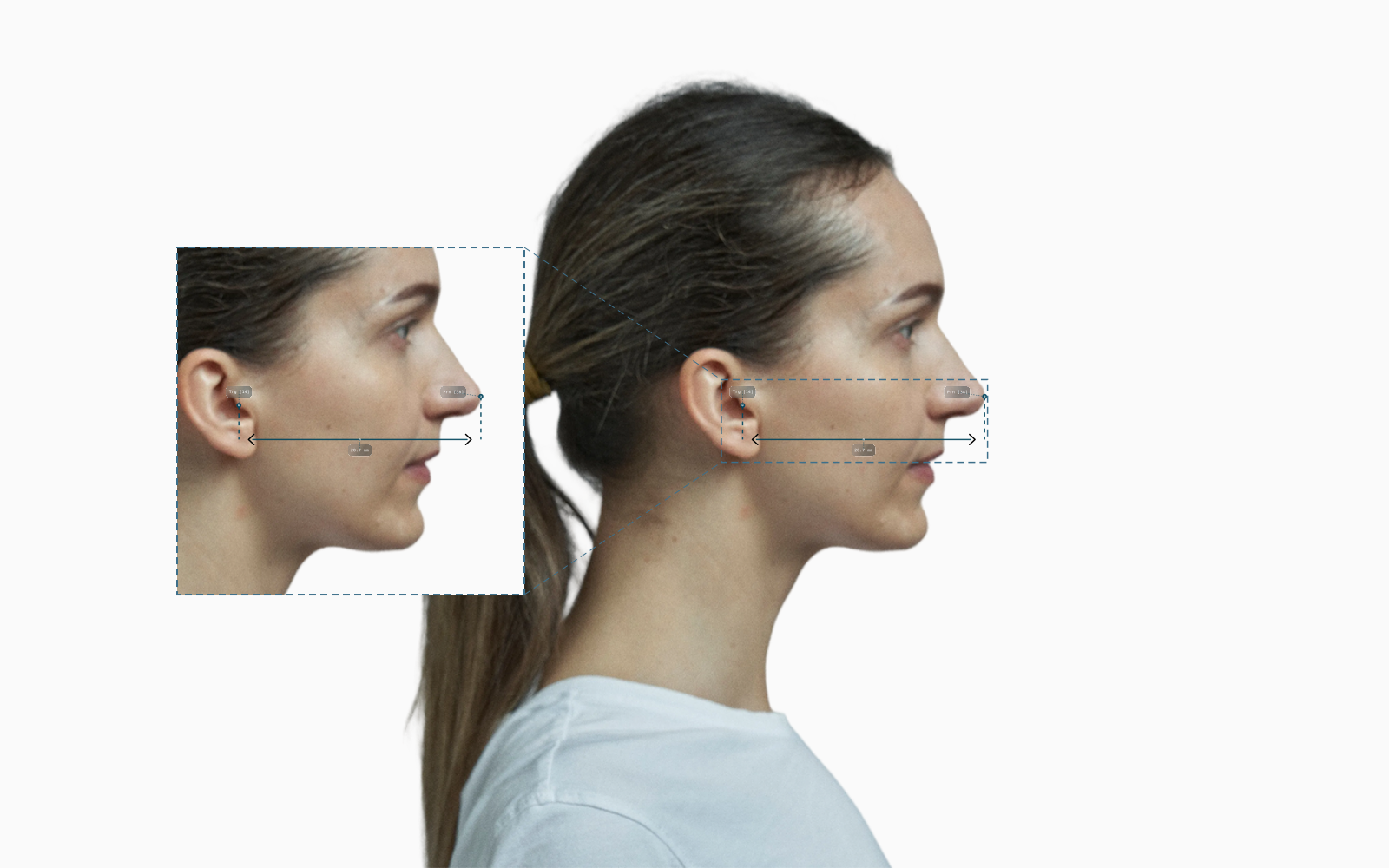
How It's Measured
Facial depth is a side-profile measurement. It asks a simple question: how far forward does the face sit, from the ear region out to the front of the nose and chin?
Join those points and you get the facial convexity angle, the standard way to put a number on how straight or curved a profile is (Naini, 2011)(Akter, 2017). A near-straight line reads as a flat, forward-projecting face. A sharper bend reads as a more convex one.

Advancing the nose and midface forward increased facial depth from 28.7 mm to 34.7 mm on the same face, same lighting, same framing.
Why It Matters
Facial depth is one of the first things the eye picks up in profile, even when nobody can name it. The facial convexity angle captures whether the chin and midface sit in balance, or whether one is pushed forward and the other set back. A strongly convex profile usually means the chin sits behind the rest of the face; a flatter profile reads as a firmer, more forward jawline (Naini, 2011).
There is no single correct angle, and this is where most charts mislead. Convexity shifts with ancestry. South Asian profiles, including Bangladeshi faces, tend to run fuller and more convex than Northern European ones, and that is a normal population difference rather than a fault (Akter, 2017). A Western textbook mean will misjudge a face it was never drawn from.
So treat the old canons as reference lines, not verdicts. They came from particular groups at particular times, and applying them without that context ignores how much a profile changes with sex, age, and background (Vegter, 2000). The card and table below give you the working numbers to compare against.
138°–146°
Men
142°–149°
Women
137°–150°
Typical Range
Fig 2. Total facial convexity angle, read from the brow past the nose to the chin. These values shift with individual facial structure and background.
Demographic Variants
Facial depth and convexity vary by population, so one ideal angle cannot fit every face. Most of the difference sits in how far the nose and chin project. Each row links to its source.
Population | Total facial convexity | Source |
|---|---|---|
Northern European / Caucasian | Straighter profiles; the long-standing Western reference norm | |
Mediterranean & West Asian | Total facial convexity roughly 138 to 149 degrees, women straighter than men | |
South Asian (Bangladeshi) | Fuller, more convex profile than European norms | |
Arab (Saudi) | Skeletal cephalometric norms differ from Western standards, with wider variance |
Загрузите чёткую фотографию анфас. При желании добавьте снимки в профиль — всего до четырёх фотографий.
Перетащите файл сюда
НЕОБХОДИМЫЕ РАКУРСЫ
ИИ разбирает 177 параметров лица: видимые особенности кожи, пропорций, глаз, бровей и других черт. Недоступные по снимку показатели не измеряются.


Вы получите план с описанием сильных сторон, черт, которые можно улучшить, и наиболее подходящих способов сделать это.
Отчёт Эммы
16 января 2026 года
Объяснение
Глубина морщин на лбу соответствует норме для вашего возраста и демографической группы и находится ближе к нижней границе ожидаемого диапазона.
Ваши вопросы
There is no one ideal. In soft-tissue analysis the total facial convexity angle, measured from the brow past the nose to the chin, usually falls between about 138 and 149 degrees in adults, and women tend to sit straighter than men (Akter, 2017). A higher number means a flatter, more forward face; a lower one means a more convex profile. What reads as ideal depends on your sex and your ancestry.
You take a side-profile photo and mark three points: the glabella between the brows, the base or tip of the nose, and the most forward point of the chin. The angle where those lines meet is your facial convexity angle (Akter, 2017). Standard facial anthropometry fixes the landmarks and reference planes so the reading repeats cleanly (Armengou, 2023).
A higher facial convexity angle means a straighter profile, with the brow, nose, and chin close to one line. A lower angle means a more convex profile, usually because the chin sits back or the midface pushes forward (Naini, 2011). Neither is a flaw by itself. The reading only means something against your own face and background.
Yes. The profile keeps shifting well after childhood as the jaw and chin grow forward and the soft tissue settles, a pattern tracked in long-term growth studies (Naini, 2011). A convexity angle measured in the teens will not match the same face read in adulthood.