1
Загрузите фотографии
Загрузите чёткую фотографию анфас. При желании добавьте снимки в профиль — всего до четырёх фотографий.
Перетащите файл сюда
НЕОБХОДИМЫЕ РАКУРСЫ


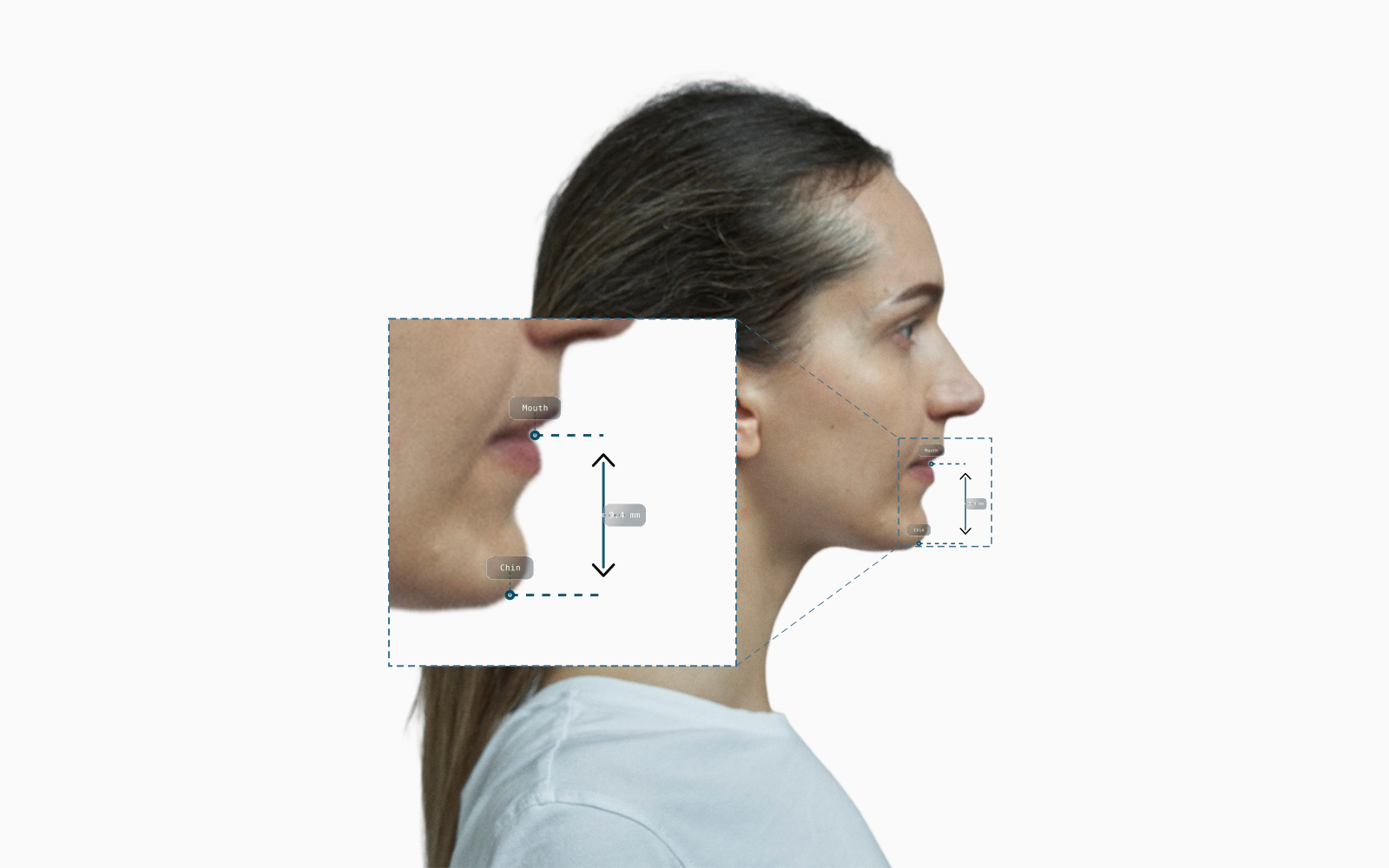
Lower face height is the distance from the base of your nose down to the bottom of your chin. That span is the lower third of the face, and it does a lot of the work in deciding whether a face reads as balanced, long, or short.
How It's Measured
Lower face height runs straight down from the base of the nose to the lowest point of the chin (Naini, 2011). It covers the lips, the gap below them, and the whole chin in one span. That is why it tends to drive how long or short a face looks.
The lips-to-chin stretch is usually the tallest piece of the lower face. So when it grows or shrinks, the whole lower third grows or shrinks with it (Canons of ideal facial dimensions, 2023).

Extending the chin downward raised the lower face height (mouth-to-chin) from 9.44 mm to 12.16 mm on the same face. Same identity, lighting, and framing, only the lower face was lengthened.
Why It Matters
Most balance rules split the face into three even thirds, and the bottom one runs from the nose base to the chin. Inside that third, the lips-to-chin part is meant to be the larger share, roughly twice the height of the nose-to-lips part (Canons of ideal facial dimensions, 2023). When the lower face height drifts from that share, the whole face starts to read as long or short.
A taller lower face carries much of the long-face look, and a short one flattens the chin and crowds the lips. This is also one of the more sex-linked parts of the face. The lower third grows more in men than in women, which is part of why a longer, heavier lower face reads as more masculine (Weston et al., 2007). A single ideal number misses that, because the same lower face height sits differently on a male and a female face.
It also changes how the lips are seen. Eye-tracking work on facial proportions finds that the height balance of the lower third shifts how full and prominent the lips look, even when the lips themselves stay the same (Kempa et al., 2024). So a long lower face is rarely judged on its own. The right value depends on sex and on the rest of the face, and the cards and table below give working ranges to read yours against.
46–54 mm
Men
42–48 mm
Women
44–52 mm
Typical Range
Fig 2. Approximate lower face height (the lips-to-chin span). It is read proportionally and varies with individual structure and background.
Demographic Variants
Ideal lower face height is read as a share of the face, not as one fixed number, and that share shifts with sex and overall facial pattern. Each row links to the source that set the range.
Population | Lower face height tendency | Source |
|---|---|---|
Men | Taller lower third on average; longer lips-to-chin span | |
Women | Shorter lower third; lower face height nearer the middle third | |
Balanced reference | Lower third about a third of face height, with the lips-to-chin part the larger share | |
Long face pattern | Lower face height taller than the rest of the face would predict, the hallmark of long face syndrome |
Загрузите чёткую фотографию анфас. При желании добавьте снимки в профиль — всего до четырёх фотографий.
Перетащите файл сюда
НЕОБХОДИМЫЕ РАКУРСЫ
ИИ разбирает 177 параметров лица: видимые особенности кожи, пропорций, глаз, бровей и других черт. Недоступные по снимку показатели не измеряются.


Вы получите план с описанием сильных сторон, черт, которые можно улучшить, и наиболее подходящих способов сделать это.
Отчёт Эммы
16 января 2026 года
Объяснение
Глубина морщин на лбу соответствует норме для вашего возраста и демографической группы и находится ближе к нижней границе ожидаемого диапазона.
Ваши вопросы
In the classic norms the lips-to-chin part of the lower face sits at about 50 mm in men and 45 mm in women, give or take a few millimetres (Naini, 2011). What matters more than the exact figure is that the lower face height stays the larger share of the lower third.
A long lower face means the lower face height is taller than the rest of the face would predict, so the lower third no longer balances the upper two. This pattern is the core of long face syndrome, and it is often skeletal, tied to how the jaw has grown and rotated rather than to soft tissue alone (Clinical Facial Analysis).
The lower third runs from the nose base to the chin. It splits again at the lips: nose-to-lips is the shorter upper part, and lips-to-chin is the longer lower part, ideally about twice as tall (Canons of ideal facial dimensions, 2023).
It can. With age the jaw can rotate forward and upward as bone resorbs, which shortens the lower face height and brings the chin closer to the lips (Naini, 2011). So the lower face height is not fixed for life.