1
Загрузите фотографии
Загрузите чёткую фотографию анфас. При желании добавьте снимки в профиль — всего до четырёх фотографий.
Перетащите файл сюда
НЕОБХОДИМЫЕ РАКУРСЫ


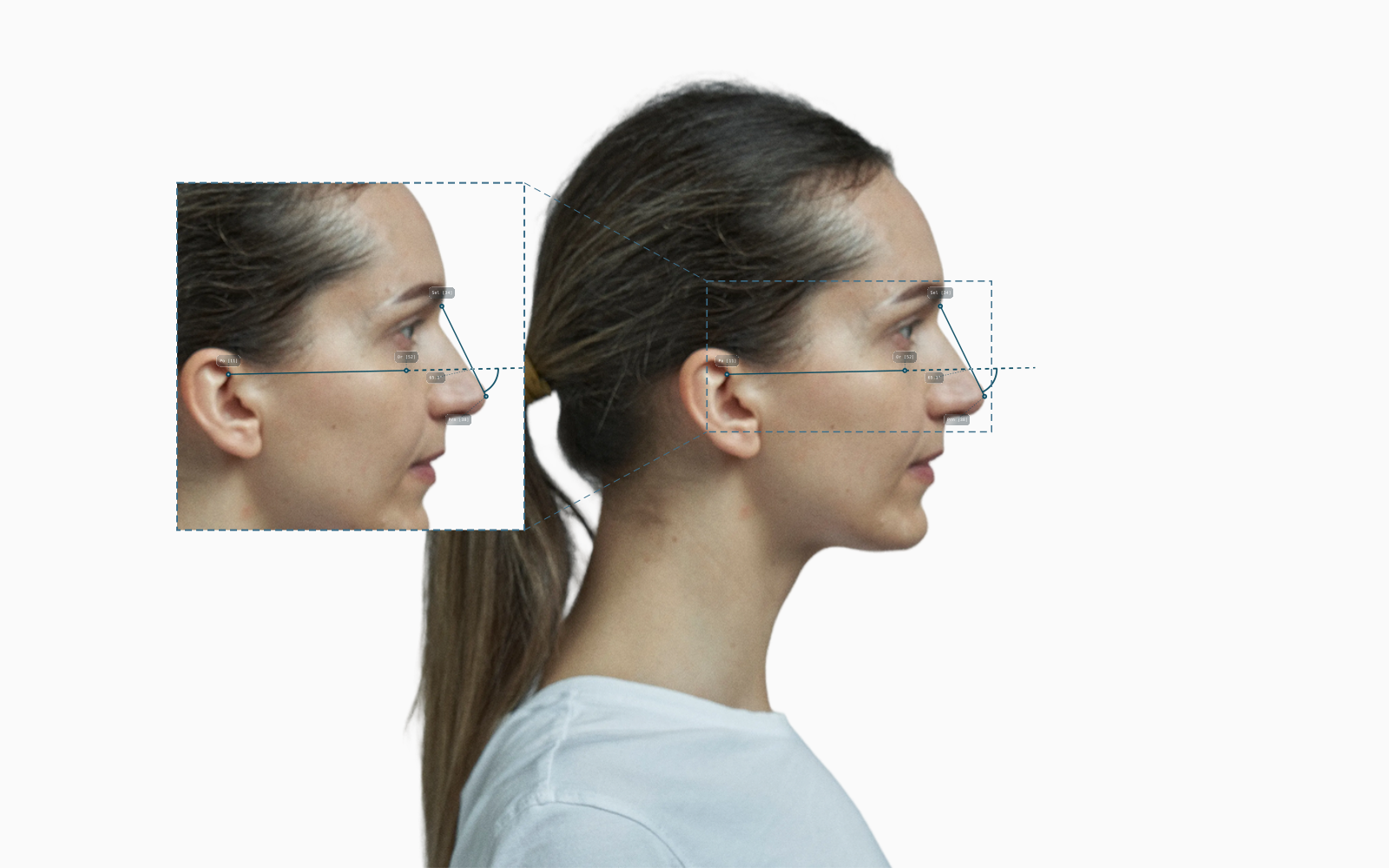
Dorsal axis angle is the tilt of the nasal bridge, the angle the line from the radix down to the tip makes against the horizontal of the face. It is the number behind whether a profile reads as a clean straight nose or one with a dorsal hump. When the mid-bridge pushes forward and the dorsum turns convex, that bump is what most people are looking at when they study their side view.
How It's Measured
The dorsal axis angle is read on a side-profile photo. It is the slope of the bridge line that runs from the radix (the deepest point between the brows, near the sellion) down to the tip, measured against the Frankfort horizontal, the standard level reference plane used in facial analysis (Naini, 2011).
Read together, the bridge slope and its straightness tell you whether the nose runs clean from root to tip or carries a hump that breaks the line (Lang, 2006).

Adding a dorsal hump raised the dorsal axis angle from 65 degrees to 69 degrees on the same face. The convex bridge tips the slope forward and breaks the straight line from radix to tip. Same identity, same lighting, same framing.
Why It Matters
The bridge is the longest unbroken line of the profile, so its slope carries much of the impression a nose makes. A straight dorsum reads as clean. A forward bulge, the dorsal hump, is the feature people ask about more than any other. In one survey of self-reported satisfaction, women and men with a straight or concave profile were happier with their noses than those with humps (Springer et al., 2008).
There is no universal target, because the dorsal axis is shaped by sex and ancestry. Nose shape is one of the more sexually dimorphic parts of the face: men trend toward a straighter or slightly convex bridge, women toward a straighter or slightly concave one (Springer et al., 2008). A mild bridge bump that suits a strong male profile can dominate a softer female one, which is why a single ideal angle misreads most faces.
Ancestry shifts the baseline just as much. A straight, higher dorsum is common in leptorrhine European noses, while mesorrhine and platyrrhine East Asian and African patterns tend toward a lower, flatter, sometimes concave bridge that calls for augmentation rather than reduction (Ethnic Rhinoplasty, 2010). A good read of the dorsal hump judges it against the profile's own background and sex rather than one borrowed number. The cards and table below give working ranges to read it against.
62°–68°
Men
60°–66°
Women
60°–68°
Typical Range
Fig 2. Approximate dorsal axis angle against the Frankfort horizontal. The slope is judged proportionally and varies with individual structure and background.
Demographic Variants
Dorsal axis tendencies vary by population and sex, so the ideal slope is relative, not absolute. The pattern below follows the classic leptorrhine, mesorrhine and platyrrhine nasal types; each row links to the source.
Population | Dorsal tendency | Source |
|---|---|---|
European (leptorrhine) | Higher, straighter dorsum; hump reduction is the common request | |
Middle Eastern | Higher dorsum with a frequent prominent hump | |
East Asian (mesorrhine) | Lower, flatter to concave bridge; augmentation more common than reduction | |
African (platyrrhine) | Low, flat dorsum with a straight or concave slope | |
Hispanic / Mestizo | Low radix, often a small osseocartilaginous hump on a thicker envelope |
Загрузите чёткую фотографию анфас. При желании добавьте снимки в профиль — всего до четырёх фотографий.
Перетащите файл сюда
НЕОБХОДИМЫЕ РАКУРСЫ
ИИ разбирает 177 параметров лица: видимые особенности кожи, пропорций, глаз, бровей и других черт. Недоступные по снимку показатели не измеряются.


Вы получите план с описанием сильных сторон, черт, которые можно улучшить, и наиболее подходящих способов сделать это.
Отчёт Эммы
16 января 2026 года
Объяснение
Глубина морщин на лбу соответствует норме для вашего возраста и демографической группы и находится ближе к нижней границе ожидаемого диапазона.
Ваши вопросы
A dorsal hump is a forward bump on the bridge of the nose that makes the dorsum look convex in profile instead of straight. It steepens the dorsal axis angle, the slope of the bridge line from the radix to the tip (Naini, 2011). The hump can sit in the bone, the cartilage, or both.
Most dorsal humps are simply how the nose grew. Nose shape is highly heritable and varies by sex and ancestry, with men trending toward a straighter or convex bridge (genetics of nasal morphology, 2020). A hump can also follow nasal trauma, where a healed bone bump combines with a slight dip behind it (Lang, 2006).
It depends on the face. A straight dorsal axis is the more common preference; in one study both sexes with a straight or concave profile were more satisfied with their noses than those with a hump (Springer et al., 2008). That said, a mild hump can suit a strong profile, and what reads as balanced is conditioned by sex and ancestry rather than one fixed ideal.
No. A bony or cartilaginous dorsal hump is fixed nasal structure and does not shrink on its own. Reducing it means surgically rasping the bone and shaving the cartilage to lower the bridge (Hispanic rhinoplasty, 2010). Fillers can only camouflage a small hump by adding volume above or below it, not remove it.