1
Загрузите фотографии
Загрузите чёткую фотографию анфас. При желании добавьте снимки в профиль — всего до четырёх фотографий.
Перетащите файл сюда
НЕОБХОДИМЫЕ РАКУРСЫ


Nostril vertical span is how tall the nostril openings read from the front, the height of the visible nares rather than their width. It is the quiet driver behind whether a nose looks like it has visible or big nostrils. More show usually means a shorter or more upturned nose, or a broader nasal base, so the trait says as much about nose type as about the nostrils themselves.
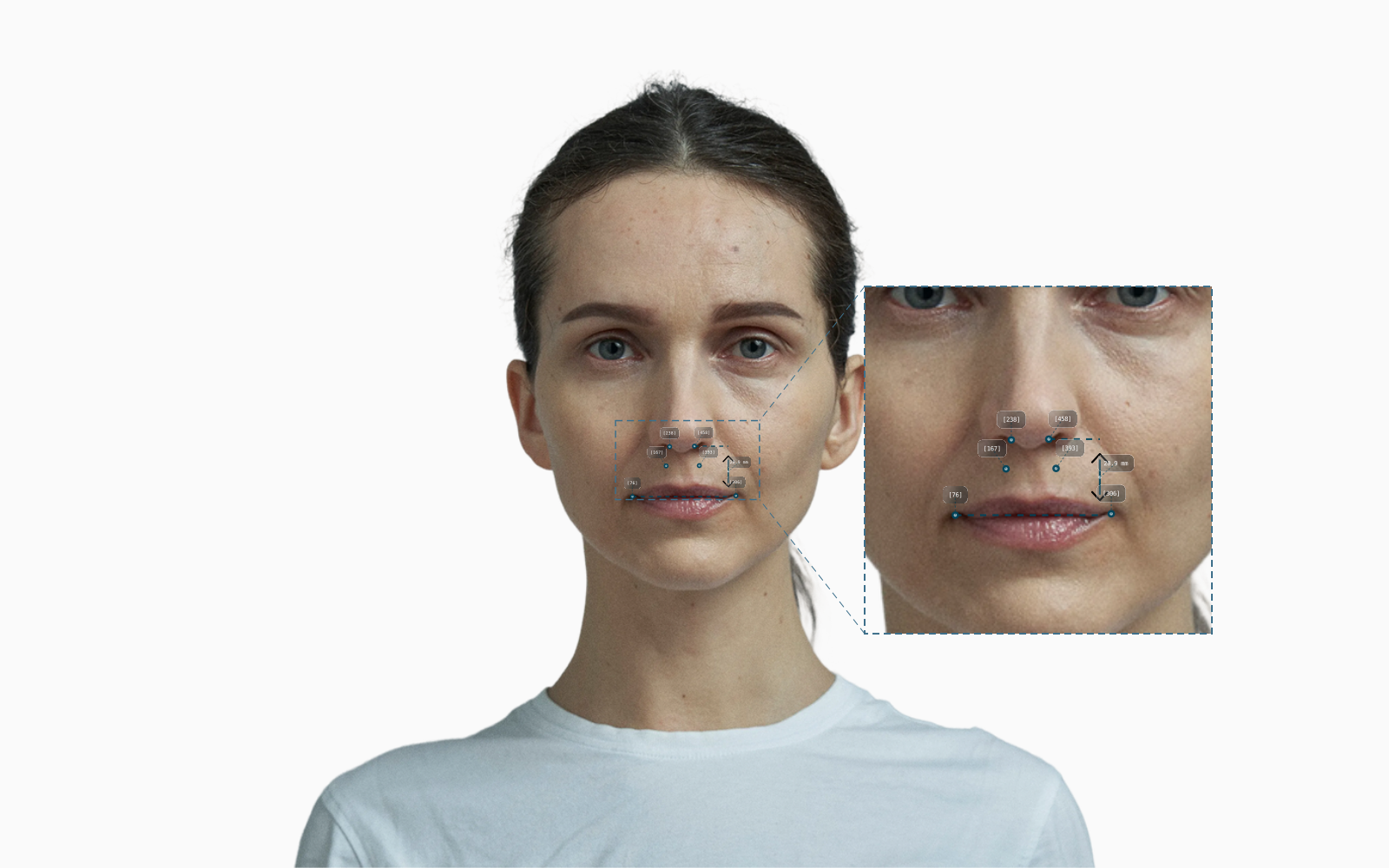
How It's Measured
Nostril vertical span is the top-to-bottom height of the nostril opening, read on a front-facing or base view of the nose. It is one slice of nostril shape, which clinicians describe by the length of the nares, the angle of their long axis, and the overall form of the opening (Etöz et al., 2008).
Read against the whole nose, a larger nostril vertical span is what people mean by visible or big nostrils, while a small span keeps the nares tucked out of the front view (Naini, 2011).

Shortening and upturning the nose raised the nostril vertical span from 20.9 mm to 24.4 mm on the same face, same lighting, same framing.
Why It Matters
The nostrils sit at the base of the nose, dead centre in the lower third of the face, so how much they show pulls the eye. A large nostril vertical span reads as visible or big nostrils, and it rarely travels alone. It usually comes with a short or upturned nose or a broad nasal base, which is why the fix is almost never about the nostril in isolation (Etöz et al., 2008).
Nostril form is also sexually dimorphic. Men tend toward larger, longer nares while women's read smaller and more tucked, one reason a heavy nostril show can feel out of place on a softer face (Etöz et al., 2008). So the same nostril span is not judged the same way on every face.
Most of all, nostril show tracks nose type, not a single ideal. Broad, platyrrhine noses carry more visible nostrils by design, while narrow leptorrhine noses hide them, and good analysis reads the nostril against that background rather than forcing one target onto every nose (Leong & White, 2009). The cards and table below give working ranges, not a verdict.
12–16 mm
Men
10–14 mm
Women
10–16 mm
Typical Range
Approximate nostril opening height read from the front. Nostril show varies with nose type and orientation and is judged proportionally, not against a single number.
Demographic Variants
Nostril vertical span follows the classic nose types, so nostril show is read against a population's typical nasal form rather than one fixed number. Each row links to the source.
Population | Nostril show tendency | Source |
|---|---|---|
European (leptorrhine) | Narrow nose with the least nostril show from the front | |
East Asian (mesorrhine) | Medium, often flatter base with moderate nostril visibility | |
African (platyrrhine) | Broad nasal base and the most visible nostrils on average | |
West African (Akan and Ewe, Ghana) | Predominantly platyrrhine, with broad, prominent nostrils | |
Men versus women | Larger, longer nares in men; smaller and more tucked in women |
Загрузите чёткую фотографию анфас. При желании добавьте снимки в профиль — всего до четырёх фотографий.
Перетащите файл сюда
НЕОБХОДИМЫЕ РАКУРСЫ
ИИ разбирает 177 параметров лица: видимые особенности кожи, пропорций, глаз, бровей и других черт. Недоступные по снимку показатели не измеряются.


Вы получите план с описанием сильных сторон, черт, которые можно улучшить, и наиболее подходящих способов сделать это.
Отчёт Эммы
16 января 2026 года
Объяснение
Глубина морщин на лбу соответствует норме для вашего возраста и демографической группы и находится ближе к нижней границе ожидаемого диапазона.
Ваши вопросы
Big or visible nostrils are usually a feature of nose type rather than the nostril alone. A short or upturned nose exposes more nostril height from the front, and a broad, platyrrhine nasal base widens and lifts the nares (Leong & White, 2009). Nostril form is also partly inherited and differs between men and women (Etöz et al., 2008).
Nostrils show more from the front when the nose is short or upturned, because the tip rotates upward and opens the nostril vertical span to view, or when the nasal base is broad. It is a shape relationship, so the amount of nostril show is read against the whole nose rather than treated as a flaw on its own (Naini, 2011).
Nostril show comes from cartilage and the shape of the nasal base, so nonsurgical options are limited to makeup contouring and, in some cases, filler to rebalance the surrounding nose. Meaningfully narrowing the nares or the alar base is a surgical change, typically an alar base reduction within rhinoplasty (Ofodile et al., 1993).
Yes. Nostril form follows the classic nose types, so a broad platyrrhine nose common in African populations carries more nostril show, while a narrow leptorrhine European nose hides the nares, with East Asian noses often sitting in between (Robertson et al., 2024). Analysis that respects the patient's own nasal type reads more honestly than one fixed ideal.