1
Загрузите фотографии
Загрузите чёткую фотографию анфас. При желании добавьте снимки в профиль — всего до четырёх фотографий.
Перетащите файл сюда
НЕОБХОДИМЫЕ РАКУРСЫ


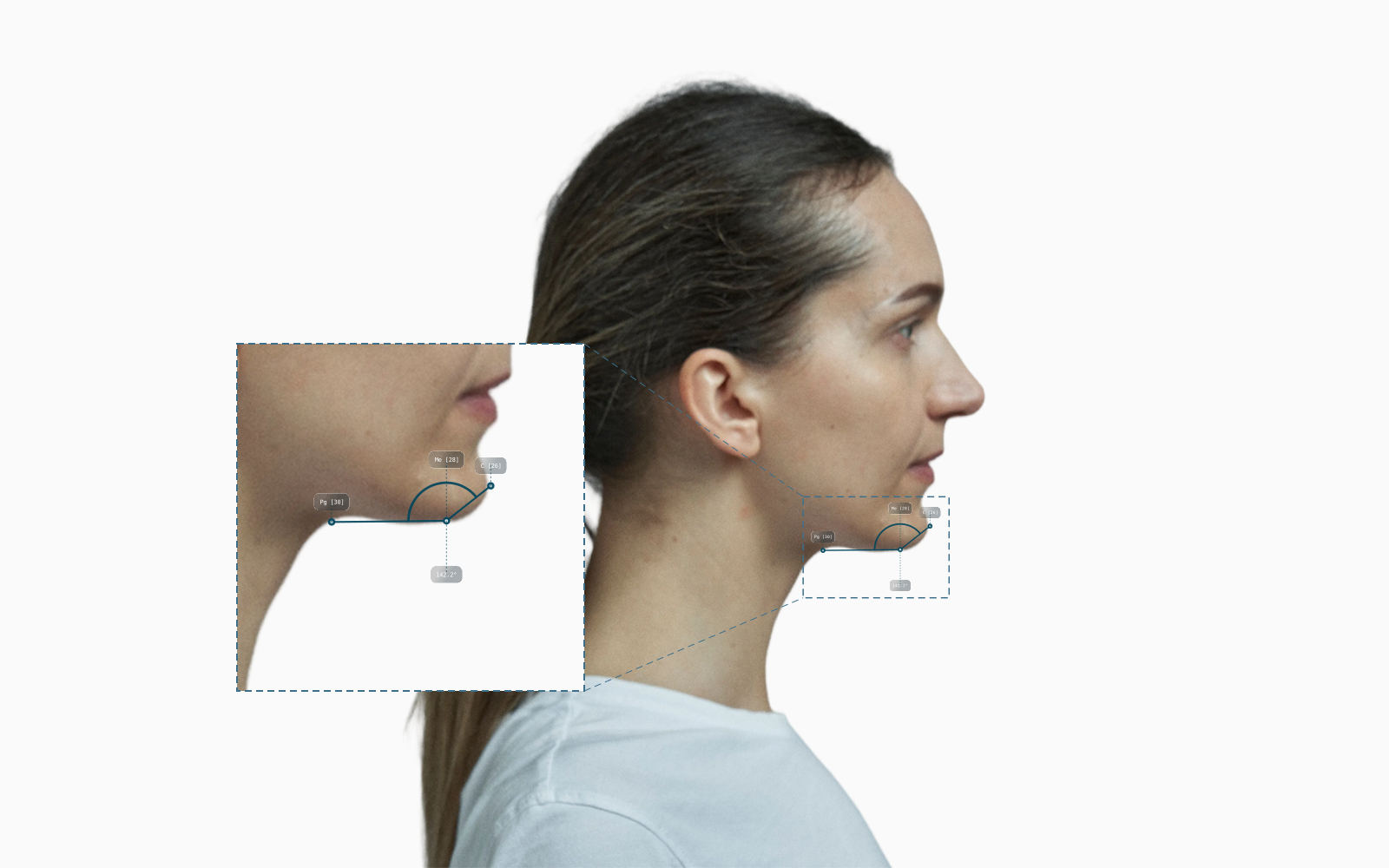
The submental angle is the bend where the underside of the chin meets the front of the neck, seen from the side. Clinicians call it the cervicomental angle. It is what makes one neckline look sharp and another look soft or heavy, and it is one of the clearest signals of a defined jaw in profile.
How It's Measured
The submental angle is a side-profile measurement. It reads the transition from the underside of the chin to the front of the neck, and puts a number on how sharp or how blunt that corner is.
Join those three points and you get the cervicomental angle, the standard way to describe chin-neck definition (Naini, 2011). It is read as the interior angle at the cervical point, between the line under the chin and the line running down the neck. A sharp, acute angle reads as a defined jawline. A wide, open one reads as a fuller neck.

Adding soft fullness under the chin blunts the chin-neck junction. The submental angle widens from 142.2° to 151.9° on the same face, same lighting, same framing.
Why It Matters
The submental angle is one of the first things the eye reads in a side profile, even when nobody can name it. A tight angle signals a firm jaw and a slim neck. An open one blurs the line between the two, so the jaw and neck stop looking like separate features. In rated-attractiveness testing the sharpest necklines scored highest, and the scores fell steadily as the angle opened out (Naini, 2015).
Open the angle past a certain point and it starts to read as a double chin or a heavy neck, whatever the person weighs. Classical teaching keeps the pleasing range on the more acute side, and once the cervicomental angle goes wider than that most people feel the neck looks full (Naini, 2015).
The angle also drives a lot of neck and jaw surgery planning. Clinicians, laypeople and patients each draw the line at a different point for when a neck looks worth treating, so there is no single ideal that fits everyone (Naini, 2015). It opens with age too, as the skin loosens and fat settles under the chin (Weinstein, 2021), and a tighter, more acute neckline tends to read as more feminine (Amir, 2019). Treat the numbers below as a reference, not a verdict.
~95°
Most Attractive
105°–120°
Classical Ideal
Above 120°
Double Chin
Fig 1. The cervicomental angle read as the interior angle at the chin-neck junction. These values shift with age, sex, and individual neck structure.
Demographic Variants
The ideal submental angle is not one fixed number. It shifts with age, with sex, and with how much fat and skin sit under the chin. Each row links to its source.
Reference point | Cervicomental angle | Source |
|---|---|---|
Classical clinical ideal | 105 to 120 degrees, with 110 degrees often cited as the target | |
Peak rated attractiveness | Sharpest necklines, near 95 degrees, scored highest | |
Double chin / heavy neck | Above 120 degrees reads as a full, undefined neck | |
Feminine read | A tighter, more defined angle reads as more feminine | |
Ageing and laxity | Opens and blunts as neck skin loosens and submental fat settles |
Загрузите чёткую фотографию анфас. При желании добавьте снимки в профиль — всего до четырёх фотографий.
Перетащите файл сюда
НЕОБХОДИМЫЕ РАКУРСЫ
ИИ разбирает 177 параметров лица: видимые особенности кожи, пропорций, глаз, бровей и других черт. Недоступные по снимку показатели не измеряются.


Вы получите план с описанием сильных сторон, черт, которые можно улучшить, и наиболее подходящих способов сделать это.
Отчёт Эммы
16 января 2026 года
Объяснение
Глубина морщин на лбу соответствует норме для вашего возраста и демографической группы и находится ближе к нижней границе ожидаемого диапазона.
Ваши вопросы
There is no single ideal. The classical range for the cervicomental angle runs from 105 to 120 degrees, with 110 degrees often cited as the target (Naini, 2015). Rated-attractiveness work found that sharper necklines, closer to 95 degrees, scored highest. A more acute submental angle reads as a defined neck, and a wider one reads as full.
You take a side-profile photo and mark three points: the menton at the base of the chin, the cervical point where the underside of the chin meets the neck, and the pogonion at the front of the chin. The angle where those lines meet at the chin-neck junction is your submental-cervical angle (Naini, 2011). Standard facial analysis fixes the landmarks so the reading repeats cleanly (Meneghini, 2005).
Once the cervicomental angle opens beyond about 120 degrees, the neck starts to read as a double chin or a heavy neck, even in people who are not overweight (Naini, 2015). The wider the angle, the more the chin and neck blur into one line instead of meeting at a defined corner.
Yes. The submental angle tends to open and blunt over time as the neck skin loosens and fat settles under the chin (Meneghini, 2005). A sharp cervicomental angle in youth can soften into a fuller, less defined neckline later on, which is why so much neck rejuvenation aims to restore it (Weinstein, 2021).