1
Загрузите фотографии
Загрузите чёткую фотографию анфас. При желании добавьте снимки в профиль — всего до четырёх фотографий.
Перетащите файл сюда
НЕОБХОДИМЫЕ РАКУРСЫ


Columella show is how much of the columella, the strip of skin between your nostrils, hangs visibly below the nostril rims when you look at a nose from the side. When too much of it drops down, the look is called a hanging columella. It is a small detail. It is also one of the things that quietly decides whether a profile reads as clean or a little heavy under the tip.
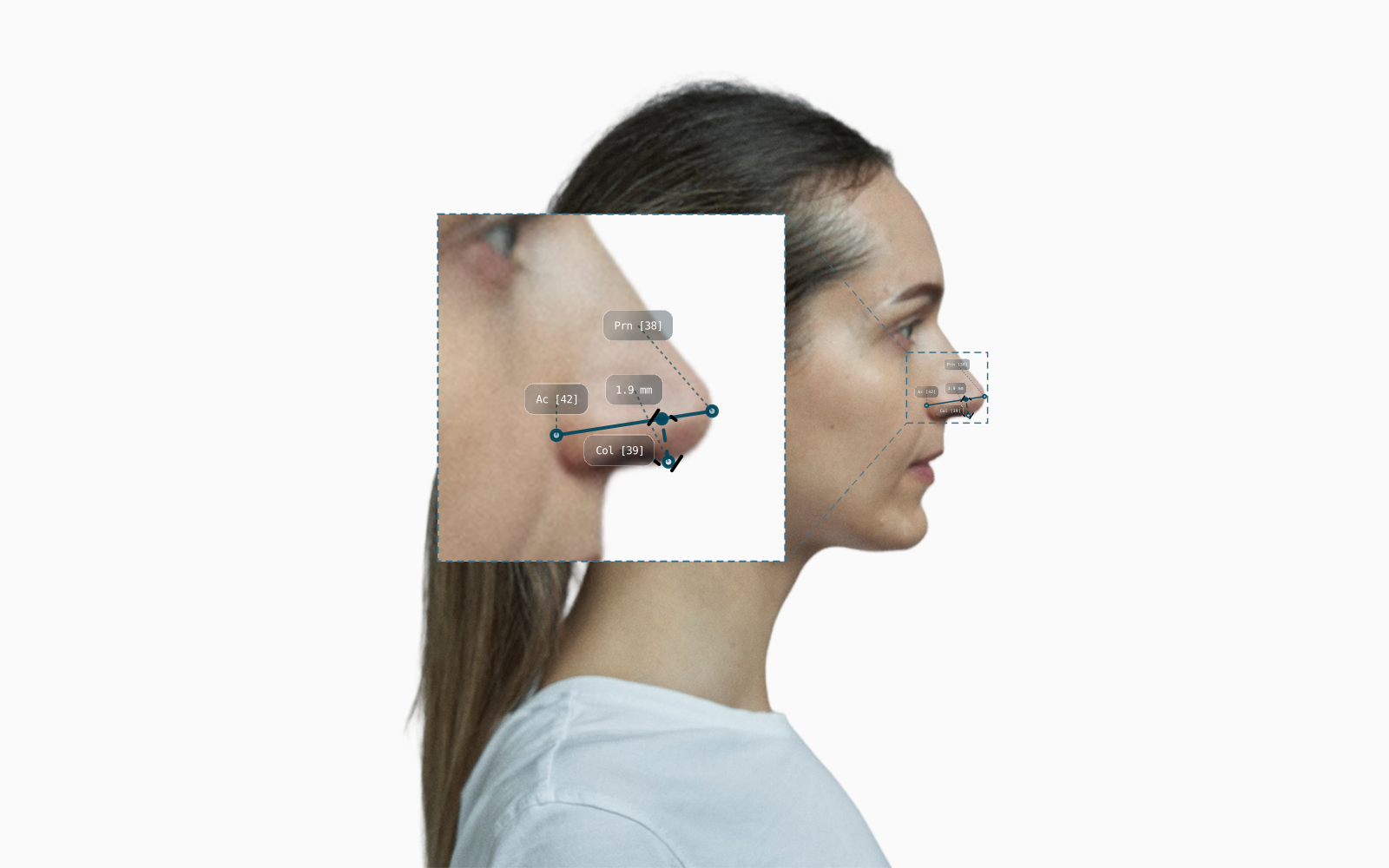
How It's Measured
Columella show is read on a side profile. You look at where the columella (the soft tissue dividing the nostrils) sits relative to the alar rim (the lower edge of the nostril). The relationship between those two lines is what surgeons call the alar-columellar relationship (Meneghini, 2005).
Read this way, columella show tells you whether the underside of the nose is in quiet balance or whether one part, the columella or the ala, is sitting too low and pulling the eye (Naini, 2011).

The same face with the columella dropped lower on the right for a hanging look. The dome-to-baseline measure reads 1.92 mm and 1.79 mm; most of the visible hang comes from the columellar rim contour, which that single distance does not fully capture. Same identity, same lighting, same framing.
Why It Matters
The underside of the nose is a small area, but the eye is sensitive to it. A balanced columella show keeps the nostril outline tidy. Too much of it, a hanging columella, makes the base of the nose look heavy and can pull the whole profile down. That is why it is one of the more common things people want softened (Meneghini, 2005).
What makes this tricky is that the same look has two different causes, and they are easy to confuse. More columella below the rim can mean the columella itself is hanging low, or it can mean the ala has retracted upward and only looks like extra columella by comparison (Naini, 2011). One is a problem with the column, the other with the rim, and they are corrected in opposite ways.
There is also no single ideal here. Columella and nostril shape track with nasal type, and the balance that looks right on a narrow European nose is not the same as the one that suits a broader nose (Ethnic Rhinoplasty, 2010). The cards and table below give working ranges, but read them against the profile's own background and sex.
1–3 mm
Men
2–4 mm
Women
2–4 mm
Typical Range
Approximate visible columella below the alar rim on profile. Columella show is judged proportionally and varies with individual structure and background.
Demographic Variants
Columella show sits inside the wider columella and nostril shape, which varies by population and sex, so the balance is relative rather than absolute. The pattern below follows the classic nasal types; each row links to the source.
Population | Columella / nostril tendency | Source |
|---|---|---|
European (leptorrhine) | Longer columella, ovoid nostril, modest show | |
East Asian (mesorrhine) | Shorter columella, less projected base | |
African (platyrrhine) | Longer columella with more flaring at its base | |
Hispanic / Mestizo | Often a shorter, less supported columella |
Загрузите чёткую фотографию анфас. При желании добавьте снимки в профиль — всего до четырёх фотографий.
Перетащите файл сюда
НЕОБХОДИМЫЕ РАКУРСЫ
ИИ разбирает 177 параметров лица: видимые особенности кожи, пропорций, глаз, бровей и других черт. Недоступные по снимку показатели не измеряются.


Вы получите план с описанием сильных сторон, черт, которые можно улучшить, и наиболее подходящих способов сделать это.
Отчёт Эммы
16 января 2026 года
Объяснение
Глубина морщин на лбу соответствует норме для вашего возраста и демографической группы и находится ближе к нижней границе ожидаемого диапазона.
Ваши вопросы
A hanging columella is when too much of the columella, the skin between the nostrils, drops below the alar rim on profile, so the columella show looks excessive. It is one of the conditions that increases columella show, the other being a retracted ala (Meneghini, 2005).
There is no single number everyone agrees on, but the columella should sit only slightly below the alar rim so the two outline together like a gull in flight. A common working guide is a few millimetres of columella show; much more reads as a hanging columella, much less as a retracted one (Naini, 2011).
Increased columella show comes from the columella sitting too low, the ala riding too high, or both together. Because a retracted ala can mimic a hanging columella, the two are told apart before any correction so the right part is treated (Meneghini, 2005).
It can. As the nose ages, the cartilage and the ligaments that suspend the tip lose strength, the tip can drop, and the relationship between the columella and the nostril rim shifts, which is one reason columella show is read alongside tip support (Meneghini, 2005).