1
Загрузите фотографии
Загрузите чёткую фотографию анфас. При желании добавьте снимки в профиль — всего до четырёх фотографий.
Перетащите файл сюда
НЕОБХОДИМЫЕ РАКУРСЫ


Earlobe size is how large the soft lobe at the bottom of the ear looks next to the rest of the ear. In anatomy it is the ear lobule, and it is read as the height of the lobe measured against the full height of the ear. That single proportion is what separates a face with big earlobes from one with small, tucked lobes.
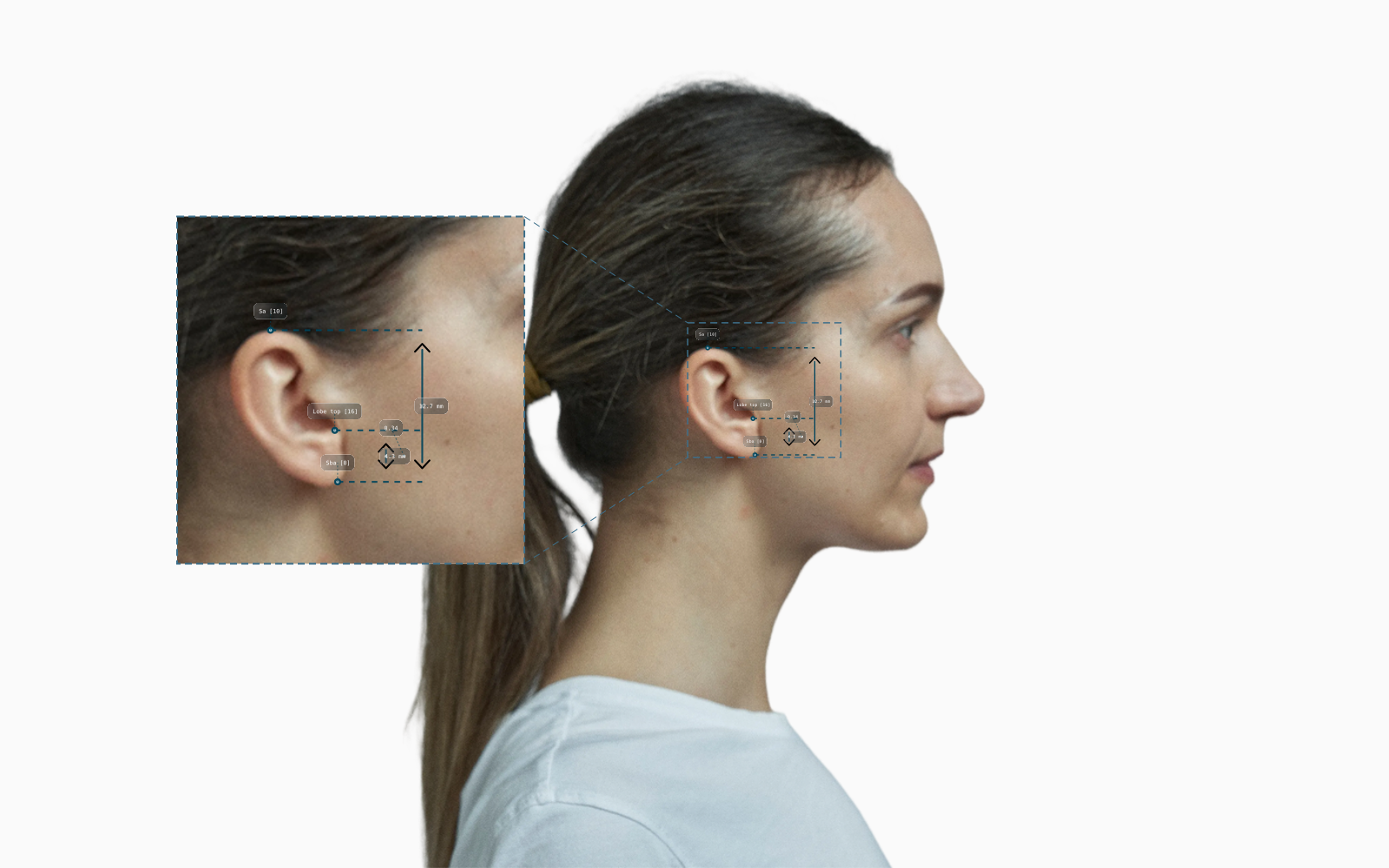
How It's Measured
Earlobe size is a side-profile reading. Rather than a raw length, it compares the height of the fleshy lobe to the height of the whole ear, so the result comes out as a proportion.
Divide the lobe height by the full ear height and you have the lobe-to-ear ratio, a simple way to say how much of the ear is lobe. Aesthetic guidelines describe the ear through proportions like this rather than fixed sizes (Naini, 2011).

Shrinking the earlobe lowered the lobe-to-ear ratio from 0.34 to 0.31 on the same face, same lighting, same framing.
Why It Matters
Earlobe size is easy to overlook until it sits at an extreme. A long, full lobe tends to read as older or heavier, while a small, tucked lobe reads as neat and youthful. The proportion carries more weight than the raw length, because a large lobe on a large ear can still look balanced.
The one thing the literature is clear about is that earlobes grow. Lobe size climbs mostly after the age of 45, pushed by gravity and, in women, by years of heavy earrings (Pandey, 2019). The skin loses its elasticity and the ear as a whole slowly enlarges across adult life (Engineer, 2018). A long lobe is often a record of time rather than a fault.
Ear size also varies from one person to the next. Overall ear height tends to run larger in men than in women, even though the lobe itself is a similar height in both (Singh, 2022), and ear proportions differ enough between populations that one fixed ideal misreads plenty of faces (Hiware, 2024). Read earlobe size against your own age, sex and background, not a single target. The card and table below give the working numbers.
12.1 mm
Men
11.9 mm
Women
9–15 mm
Typical Range
Fig 2. Ear lobule height in adults. The lobe is a similar height in men and women, and it shifts most with age and individual ear structure.
Demographic Variants
Earlobe size sits inside overall ear size, and both shift with population and sex. Most of the difference lands in total ear height rather than the lobe itself. Each row links to its source.
Population | Typical ear & lobe size | Source |
|---|---|---|
General adult reference | Ear lobule height around 12 mm, similar in men and women | |
North Indian | Ear height about 62 mm in men and 59 mm in women | |
Saudi (Eastern Province) | Clear sex differences across ear measurements | |
Nepali | Lobe enlarges mainly after age 45 with gravity and earrings |
Загрузите чёткую фотографию анфас. При желании добавьте снимки в профиль — всего до четырёх фотографий.
Перетащите файл сюда
НЕОБХОДИМЫЕ РАКУРСЫ
ИИ разбирает 177 параметров лица: видимые особенности кожи, пропорций, глаз, бровей и других черт. Недоступные по снимку показатели не измеряются.


Вы получите план с описанием сильных сторон, черт, которые можно улучшить, и наиболее подходящих способов сделать это.
Отчёт Эммы
16 января 2026 года
Объяснение
Глубина морщин на лбу соответствует норме для вашего возраста и демографической группы и находится ближе к нижней границе ожидаемого диапазона.
Ваши вопросы
In adults the ear lobule is roughly 12 mm tall, and it measures about the same in men and women (Engineer, 2018). Earlobe size is usually judged as a proportion of the whole ear rather than a fixed length, since a larger ear carries a larger lobe and still looks balanced.
Big earlobes come mostly down to genetics and age. Lobe size climbs after the age of 45 as the skin loses elasticity and gravity pulls the tissue down, and years of heavy earrings add to it (Pandey, 2019). A large lobe is a normal variation, not a sign that anything is wrong.
Yes. The earlobe is the part of the ear that changes most over time, enlarging noticeably after 45 (Pandey, 2019). The ear as a whole keeps growing slowly through adult life as its skin thins and loses resilience (Engineer, 2018), so earlobe size measured in your twenties will not match the same ear decades later.
An attached earlobe joins directly to the side of the face with little or no hanging tissue, while a free earlobe hangs below the point where it meets the jaw. This is separate from earlobe size: a free lobe simply has more visible length below the attachment, which is why free lobes often read as larger. The trait was once taught as a single-gene difference, but it is now understood to be shaped by many genes together.