1
Загрузите фотографии
Загрузите чёткую фотографию анфас. При желании добавьте снимки в профиль — всего до четырёх фотографий.
Перетащите файл сюда
НЕОБХОДИМЫЕ РАКУРСЫ


Upper eyelid curvature is the shape of the arc traced by the top edge of your eyelid, from the inner corner to the outer. When that arc flattens and a fold of skin starts to drape over the lash line, you get what most people call hooded eyes. It is one of the details that decides whether the eye reads as open and lifted or heavy and tired, and it shapes how expressive the whole face looks.
How It's Measured
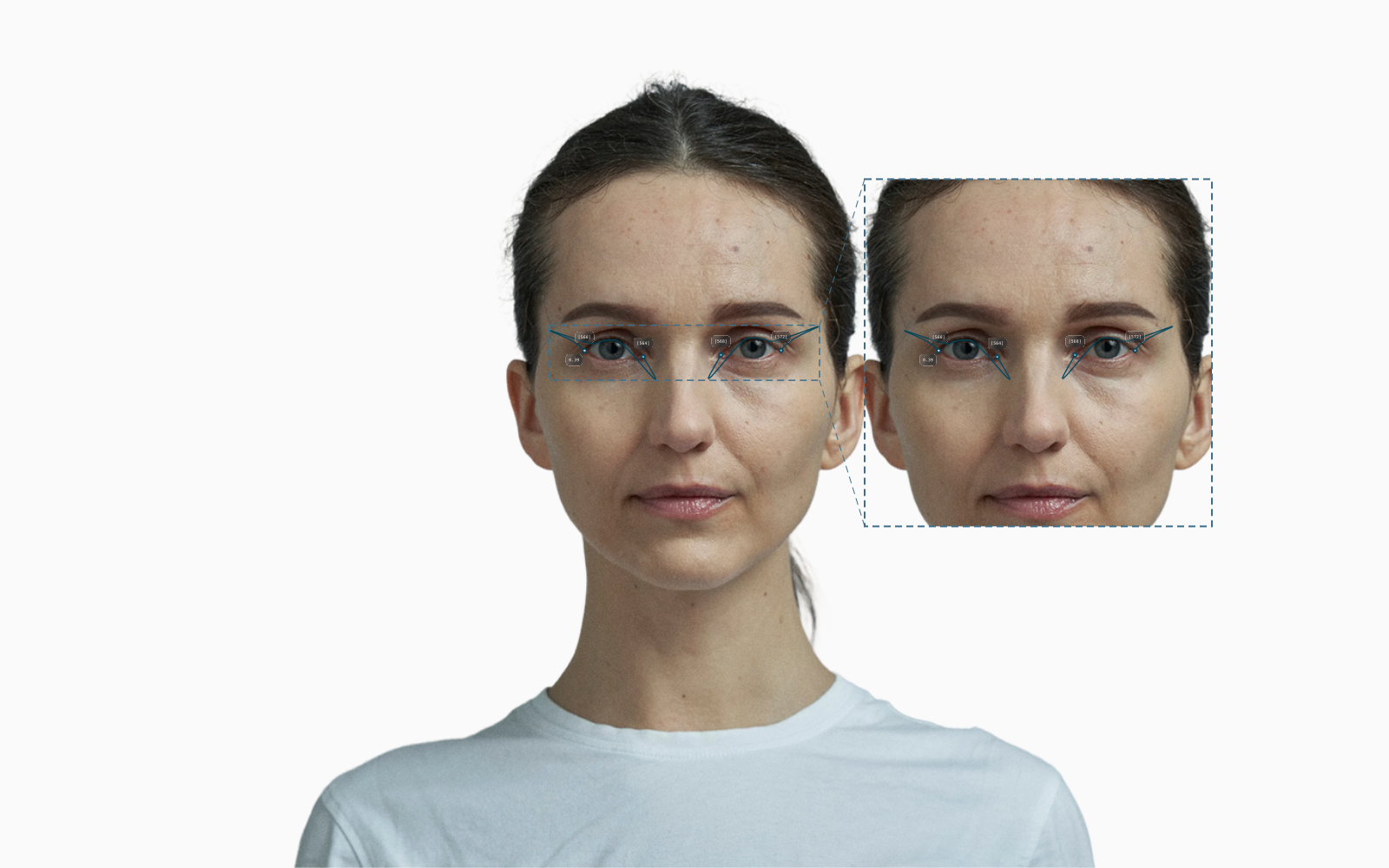
Upper eyelid curvature is read straight on, from a front-facing photo. We trace the upper lid margin, the line where the lashes meet the eyeball, and measure how sharply that line bends as an arc.
A high, open arc reads as a wide, alert eye. A flatter arc with skin folding over it reads as more hooded (Meneghini, 2005).

The same face with a much heavier upper eyelid fold on the right. As skin drapes over the lash line, the traced lid curvature flattens from 0.39 to 0.31. The hooded look is unmistakable even though the number only shifts by a fifth. Same identity, same lighting, same framing.
Why It Matters
The eye is the first thing people look at, and the upper eyelid frames it. A high, smooth arc keeps the lid open and the gaze bright. As the arc flattens and skin folds over it, the eye starts to read as hooded, which most observers register as tired, older, or less awake (Nkengne et al., 2008). That one change in lid contour shifts how the whole face comes across.
Hooded eyes are not a flaw, though. Plenty of striking faces have them, and how much hooding reads as attractive is partly cultural rather than fixed (Zhan et al., 2021). The point is that the upper lid does not work alone. It sits under the brow, and a lower or flatter brow pushes skin down onto the lid, deepening the hood (Roth & Metzinger, 2003). So when an eye looks heavy, the cause is often the brow, not the lid itself.
This is also why hooding tends to creep in with age. The skin loses tone, the brow drifts down, and the upper lid crease can extend out toward the temple, a pattern clinicians watch for (Meneghini, 2005). The cards and table below give working ranges, but read them against the face's own brow position and age rather than chasing one ideal number.
0.38 to 0.45
Open lid
0.25 to 0.32
Hooded lid
0.30 to 0.42
Typical Range
Fig 2. Upper eyelid curvature is a contour value (k), not a length. It is judged proportionally and varies with brow position, age and individual structure.
Demographic Variants
Upper eyelid curvature and the tendency toward hooded eyes vary with eyelid anatomy, brow position and age rather than with one fixed ideal. The pattern below follows the periorbital differences described in the clinical literature; each row links to the source.
Demographic | Lid curvature tendency | Source |
|---|---|---|
Younger adults | Higher, more open lid arc; less hooding | |
Older adults | Flatter arc as skin and brow descend, more visible hooding | |
East Asian eyelids | Often a lower or absent lid crease, so the lid reads fuller and more hooded | |
Lower-set brows | Brow descent drapes skin onto the lid and deepens the hood | |
Connell's sign present | Lid crease extends laterally onto the temple, a marker of forehead and brow ptosis |
Загрузите чёткую фотографию анфас. При желании добавьте снимки в профиль — всего до четырёх фотографий.
Перетащите файл сюда
НЕОБХОДИМЫЕ РАКУРСЫ
ИИ разбирает 177 параметров лица: видимые особенности кожи, пропорций, глаз, бровей и других черт. Недоступные по снимку показатели не измеряются.


Вы получите план с описанием сильных сторон, черт, которые можно улучшить, и наиболее подходящих способов сделать это.
Отчёт Эммы
16 января 2026 года
Объяснение
Глубина морщин на лбу соответствует норме для вашего возраста и демографической группы и находится ближе к нижней границе ожидаемого диапазона.
Ваши вопросы
Hooded eyes are eyes where a fold of upper eyelid skin drapes down over the lash line, partly covering the moving part of the lid. In measurement terms the upper eyelid curvature flattens, so the eye reads as heavier and less open. It can be present from a young age or develop later as the brow and skin descend (Meneghini, 2005).
Look straight ahead in a mirror with your eyes open and relaxed. If you cannot see much of the smooth, moving part of the upper lid because skin folds over it, you have some degree of hooding. A flatter upper eyelid curvature and a crease that sits low or hides behind the fold are the usual signs (Naini, 2011).
There is no single answer. A heavily hooded lid can read as tired or older, which is why a more open upper eyelid curvature is often preferred (Nkengne et al., 2008), but plenty of admired faces have hooded eyes, and how much hooding reads as appealing shifts between cultures rather than being fixed (Zhan et al., 2021).
Hooded eyes come from the upper lid skin and the brow above it, not the eyeball. Excess or lax lid skin, a low or absent lid crease, and a brow that sits low all push skin down over the lash line and flatten the upper eyelid curvature. The brow is often the real driver, since brow descent drapes skin onto the lid (Roth & Metzinger, 2003).
Often, yes. Skin loses tone, the brow drifts downward, and the upper lid crease can extend out toward the temple, which clinicians treat as a sign of forehead and brow ptosis (Meneghini, 2005). The result is a flatter upper eyelid curvature and a more hooded look over time, though the pace varies a lot between people (Nkengne et al., 2008).