1
Загрузите фотографии
Загрузите чёткую фотографию анфас. При желании добавьте снимки в профиль — всего до четырёх фотографий.
Перетащите файл сюда
НЕОБХОДИМЫЕ РАКУРСЫ


Mouth width, known in the clinic as the intercommissural distance, is the straight-line span between the two corners of your mouth. It is one of the most stable horizontal landmarks on the face, and it quietly anchors how balanced your lower third reads against your nose and eyes. A mouth that is too narrow or too wide for the rest of the face is something people notice long before they can name why.
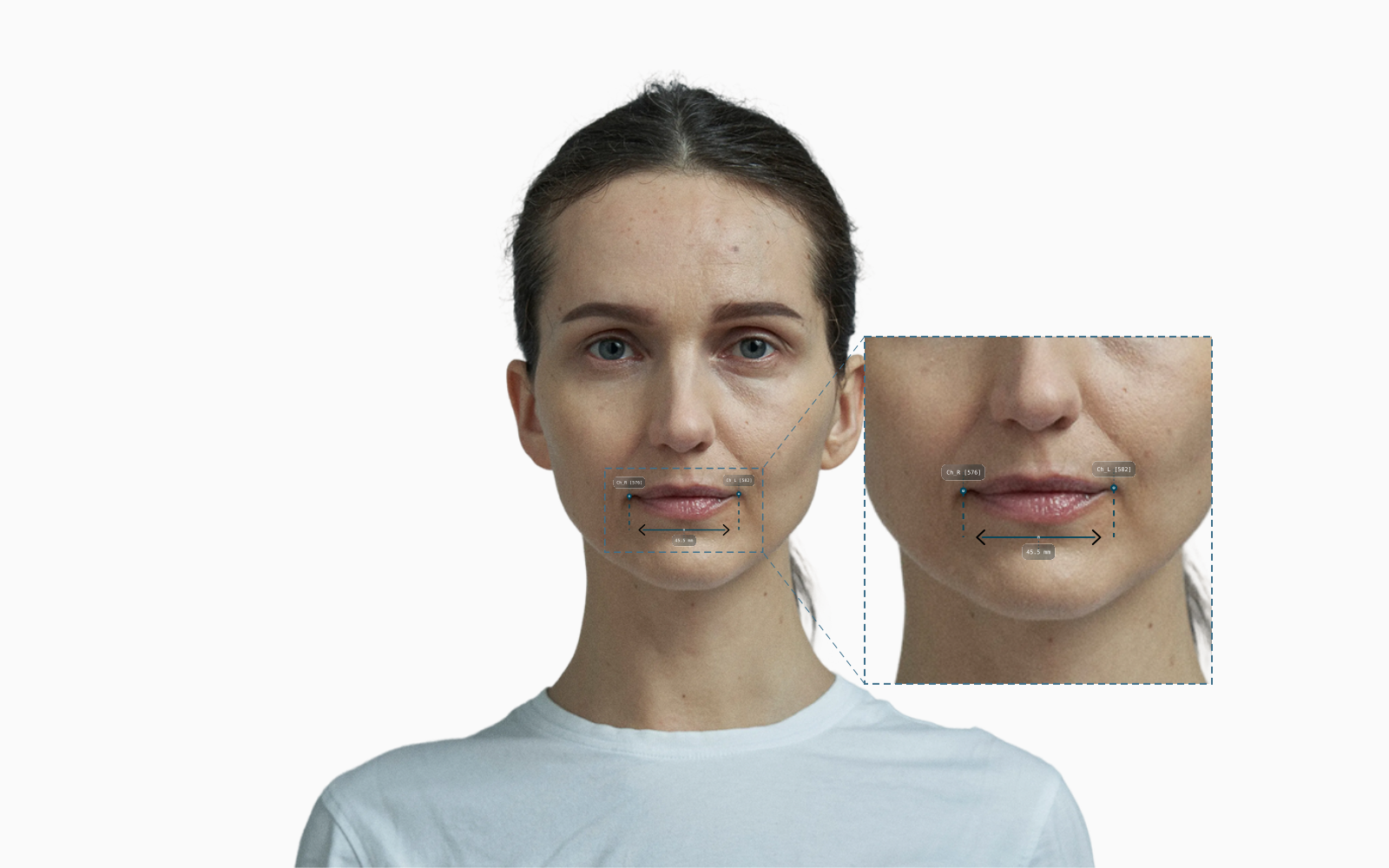
How It's Measured
Mouth width is the horizontal distance between the two mouth corners, the points anatomists call the cheilions, measured with the lips relaxed and closed (Stephan, 2003). It is read on a front-facing photo, and because the corners barely move when you are at rest, it stays one of the more repeatable measurements on the face.
On its own the number tells you little. What it really describes is whether the mouth feels in scale with the features around it, which is why classic facial canons judge it as a ratio rather than a fixed length (Farkas, 1985).

Widening the mouth corners raised the mouth width from 45.5 mm to 49.6 mm on the same face. Same identity, same lighting, same framing, only the corners moved apart.
Why It Matters
The mouth sits at the centre of the lower face, so its width does more than you would expect for how proportionate a face reads. Eye-tracking studies show people look at the lips early and often when they judge a face, and the mouth carries more of that first impression than most other single features (Jankowska et al., 2024). A mouth that is well scaled to the nose and eyes tends to read as balanced almost before you notice the mouth itself.
There is no single ideal in millimetres. The older neoclassical canons tried to pin one down, the best known being that the mouth should be about one and a half times the width of the nose, but real faces rarely obey it and forcing one number onto every face misreads most of them (Farkas, 1985). Mouth width also varies by population and sex, which is exactly why a global rule fails (Akpan et al., 2019).
It is worth being honest about how much mouth width alone decides. A wider mouth is often read as more expressive, and full lips are one of the few features that consistently lift female facial attractiveness across cultures (Johnston, 1999), yet the same studies find lip fullness and the proportion of upper to lower lip drive perception far more than corner-to-corner width does. The intercommissural distance is best read as one supporting line in the lower face, not the headline. The cards and table below give working ranges, but read them against the whole face.
50–55 mm
Men
45–50 mm
Women
45–55 mm
Typical Range
Fig 2. Approximate relaxed mouth width. Mouth width is judged in proportion to the nose and eyes and varies with individual structure and background.
Demographic Variants
Mouth width varies by population and sex, so the ideal is a proportion rather than one fixed length. The pattern below is read against nose width and overall facial scale; each row links to the source.
Population | Mouth width tendency | Source |
|---|---|---|
Men (vs women) | Wider on average, by roughly 4–5 mm | |
European / Caucasian | Mouth-to-nose ratio close to the classic 1.5 canon | |
West African (Ibibio) | Wider mouth relative to nose; ratio nearer 1.25 | |
Asian vs Caucasian | Proportions differ; no single ratio fits both |
Загрузите чёткую фотографию анфас. При желании добавьте снимки в профиль — всего до четырёх фотографий.
Перетащите файл сюда
НЕОБХОДИМЫЕ РАКУРСЫ
ИИ разбирает 177 параметров лица: видимые особенности кожи, пропорций, глаз, бровей и других черт. Недоступные по снимку показатели не измеряются.


Вы получите план с описанием сильных сторон, черт, которые можно улучшить, и наиболее подходящих способов сделать это.
Отчёт Эммы
16 января 2026 года
Объяснение
Глубина морщин на лбу соответствует норме для вашего возраста и демографической группы и находится ближе к нижней границе ожидаемого диапазона.
Ваши вопросы
Relaxed mouth width usually falls around 45 to 50 mm in women and 50 to 55 mm in men, with men averaging a few millimetres wider (Stephan, 2003). The figure that matters more than the millimetres is how the mouth scales to the nose and the rest of the face.
Mouth width is the straight-line distance between the two mouth corners, the cheilions, taken with the lips closed and relaxed rather than smiling (Stephan, 2003). It is read from a front-on photo, since the corners barely shift at rest, which makes it one of the steadier facial measurements.
The classic neoclassical canon says the mouth should be about one and a half times the width of the nose, but most real faces sit off that mark, and the ratio shifts by population (Farkas, 1985). West African faces, for example, tend toward a wider mouth relative to the nose (Akpan et al., 2019), so treat the 1.5 figure as a rough European reference, not a universal target.
A wider mouth often reads as more expressive, and fuller lips reliably lift female facial attractiveness across cultures (Johnston, 1999). Even so, lip fullness and the balance of upper to lower lip drive perception far more than corner-to-corner mouth width on its own, so a wider mouth is not automatically a more attractive one.